13 Weeks Pregnant: Symptoms, Baby Size & What to Expect
At 13 weeks pregnant, your baby is peach sized and fingerprint ridges are forming as you cross into the second trimester. Many people also notice the second-trimester 'honeymoon phase' beginning, with a real shift in energy and nausea.
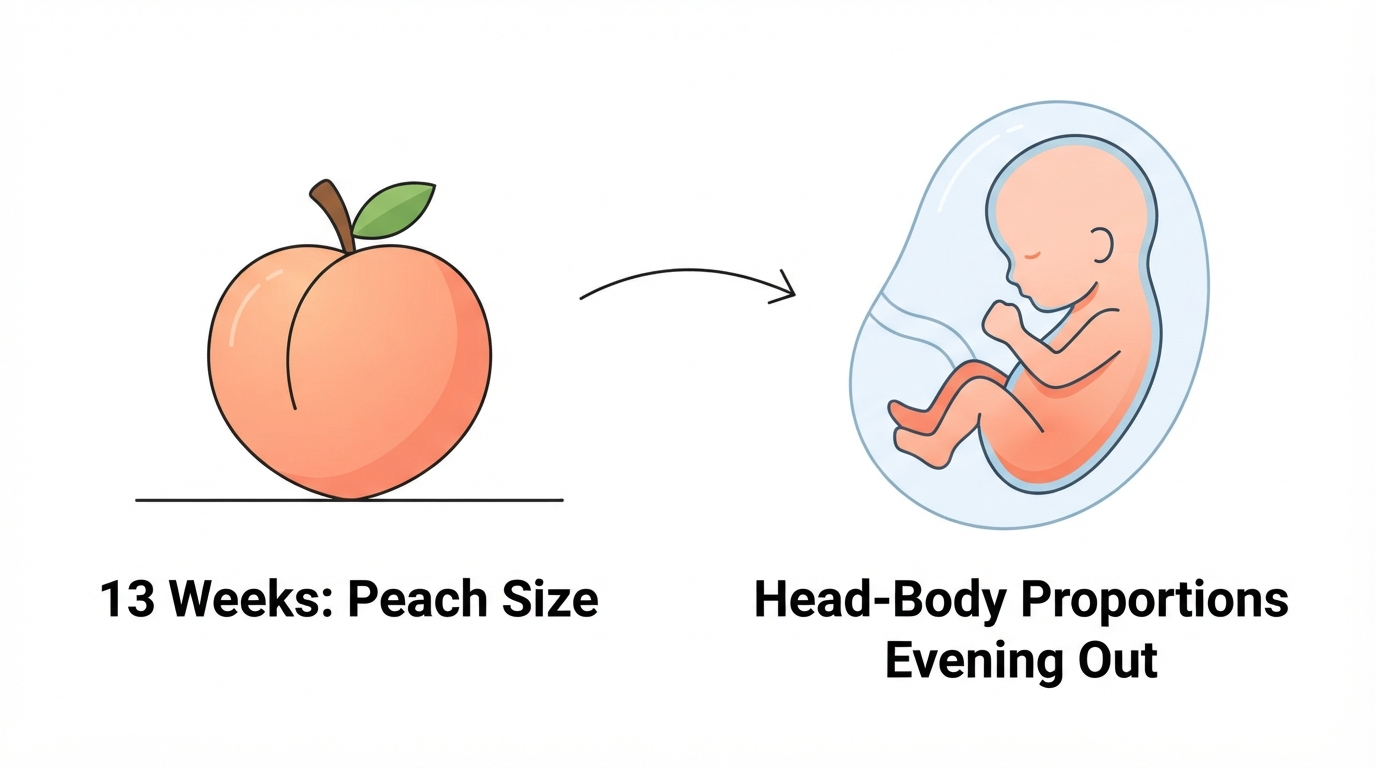
At 13 weeks pregnant, your baby is about the size of a peach, and you're standing right at the boundary between the first and second trimesters. The head is growing more proportionate to the body with each passing week, and fingerprint ridges are starting to form on those tiny fingertips — a detail that will be permanently unique by the time your baby is born.
If your dates feel confusing, remember that gestational age counts from the first day of your last period (LMP), not from conception — so "13 weeks pregnant" usually means about 11 weeks since ovulation. For the full timeline, see our pregnancy week-by-week guide, or find out exactly how your due date is calculated. If you're picking up from last week, catch up on 12 weeks pregnant first.
Key takeaways
- Baby is about the size of a peach (roughly 65–78 mm, crown-rump length) this week.
- Fingerprint ridges are starting to form — the beginning of a pattern that will be unique for life.
- Week 13 sits right at the boundary between the first and second trimesters, depending on which convention you use.
What "13 Weeks Pregnant" Actually Means
Using standard gestational dating, week 13 starts about 11 weeks after ovulation. In fetal-age terms (counting from conception rather than your last period), this is closer to "11 weeks post-conception," which is why the same developmental milestone can appear under a different week number depending on the source.
Week 13 also sits in a genuine gray area for trimester boundaries — some sources count the first trimester as ending after week 12, others (including our own pregnancy week-by-week guide) place the cutoff at the end of week 13. Either way, you're at the very edge of it, and we covered last week why that milestone matters: the statistical risk of miscarriage drops substantially once you're through the first trimester.
Baby Size at 13 Weeks
At 13 weeks, your baby is about the size of a peach — roughly 65 to 78 millimeters long, measured crown-to-rump. The head-to-body ratio keeps evening out compared to a few weeks ago, and the limbs continue lengthening and adding definition.
Fingerprints Are Forming
One of the more striking developments this week: fingerprint ridges are starting to form on your baby's fingertips. These ridges are shaped partly by genetics and partly by the unique pressure and position of each finger inside the womb, which is part of why even identical twins end up with different fingerprints.
Elsewhere, the large intestine is settling into its permanent position in the abdomen after completing its earlier migration, and the head is growing at a slightly slower rate than the body — a shift that will continue leveling out the proportions over the coming weeks. Vocal cords, which began forming last week, continue developing, though it will be a long while before there's anything to hear.
Why this matters for prenatal care. With genetics-driven detail work like fingerprint formation underway, continuing to avoid alcohol, unapproved medications, and other flagged exposures remains important as you move into the second trimester. (General guidance — confirm specifics with your provider: ACOG)
What You Might Notice at 13 Weeks Pregnant
For many people, week 13 is where the roughest first-trimester symptoms genuinely start to fade, ushering in what a lot of people call the "honeymoon phase" of pregnancy. Here's what commonly shows up:
Nausea continuing to ease for many. If morning sickness hasn't already started lifting, many people notice real improvement somewhere around this stretch, though the timeline still varies widely.
Energy beginning to return. As hormone levels stabilize, a genuine uptick in energy — not just less fatigue — is common starting around now.
A small but visible bump for some. The uterus is rising out of the pelvis, and for people who are slimmer or further along with a previous pregnancy, a small bump can start to show.
Frequent urination continuing. This tends to persist through pregnancy as the uterus keeps growing.
Round ligament twinges. As the uterus expands, occasional light pulling or twinging sensations low in the abdomen are common and generally harmless.
Increased appetite. As nausea eases, many people notice their appetite picking back up, sometimes sharply.
Visible veins. Rising blood volume can make veins more noticeable, particularly on the chest or legs.
It's also completely normal for symptoms to persist longer or to have experienced very few in the first place. Symptom timing and intensity vary widely from person to person and even between pregnancies for the same person.
What's Happening in Your Body
- The "honeymoon phase" often begins. Many people notice a genuine shift in energy and nausea starting around this point.
- Fingerprints start forming. As covered above, ridges are shaped by both genetics and finger position.
- Head-to-body proportions keep evening out, with the body growing faster than the head.
- The large intestine finishes settling into its permanent position.
- The uterus continues rising out of the pelvis, becoming palpable low in the abdomen for many people around now.
Tips for Week 13
Keep taking your prenatal vitamin with folic acid. Fine detail work like fingerprint formation continues, so consistency still matters.
Ease back into regular meals if nausea is lifting, but keep bland snacks on hand in case symptoms resurface.
Stay hydrated. This remains a helpful habit even as morning sickness eases.
Consider maternity basics. If your regular waistband is feeling tight, this is a common week to start looking at maternity or stretch-friendly clothing.
Avoid alcohol, tobacco, and unapproved medications. These guidelines continue through pregnancy, not just the first trimester.
Enjoy the extra energy if it arrives. Many people use this stretch to catch up on rest reserves or tackle tasks that felt impossible a few weeks ago.
Tips for Partners
- Celebrate crossing into the second trimester together — it's a meaningful milestone worth acknowledging, whichever week you count it from.
- Notice and support any shifts in energy or appetite, which can pick up quickly as nausea eases.
- Keep engaging with prenatal appointments, since the pace and focus of care often shifts heading into the second trimester.
- Ask if they're ready to share the news more widely, and support whatever pace feels right for them.
FAQ
How big is my baby at 13 weeks pregnant? About the size of a peach — roughly 65 to 78 millimeters, measured crown-to-rump.
Am I in my first or second trimester at 13 weeks? It depends on the source. Some count the first trimester as ending after week 12; others, including our week-by-week guide, place the boundary at the end of week 13. Either way, you're right at the edge of it.
What is developing in my baby at 13 weeks? Fingerprint ridges are starting to form, the large intestine is settling into its permanent position, and head-to-body proportions continue evening out.
When do fingerprints fully form? Ridges begin forming around this stage and continue developing over the following weeks; the pattern is shaped by genetics and by each finger's unique position in the womb.
What symptoms are normal at 13 weeks pregnant? Easing nausea, returning energy, frequent urination, round ligament twinges, increased appetite, and visible veins are all common, though timing varies widely.
When does the "honeymoon phase" of pregnancy usually start? Many people notice it starting somewhere around weeks 13 to 14, as first-trimester symptoms ease and energy returns — though it's not universal.
When is my next prenatal appointment likely to be? Many providers continue with appointments roughly every four weeks through the second trimester, though your provider will confirm the schedule that's right for you.
Pregnancy Checklist at Week 13
- Keep taking a prenatal vitamin with folic acid daily
- Ease back into regular meals as nausea allows, keeping snacks on hand just in case
- Stay hydrated throughout the day
- Look into maternity or stretch-friendly clothing if your regular clothes feel tight
- Avoid alcohol, tobacco, and check any medications with your provider
- Confirm your next prenatal appointment and any second-trimester screening options
- Note any severe cramping or heavy bleeding and call your provider if it occurs
Related guides
- 12 Weeks Pregnant: Symptoms, Baby Size & What to Expect — what happened the week before, as reflexes came online
- Pregnancy Week by Week: A Complete Guide — see what happens in every week and trimester, from implantation to full term
- How Is Your Due Date Actually Calculated? — the exact formula behind your due date, plus a free calculator
Week 13 sits right on the line between trimesters — fingerprint ridges are forming for the first time, and for many people, this is the week the "honeymoon phase" of pregnancy genuinely begins.
Read related post: 12 Weeks Pregnant: Symptoms, Baby Size & What to Expect
Ready to throw the best reveal?
Create your free Poppit event — invitations, live betting pool, and registry in one link.
Create your event ✨