21 Weeks Pregnant: Symptoms, Baby Size & What to Expect
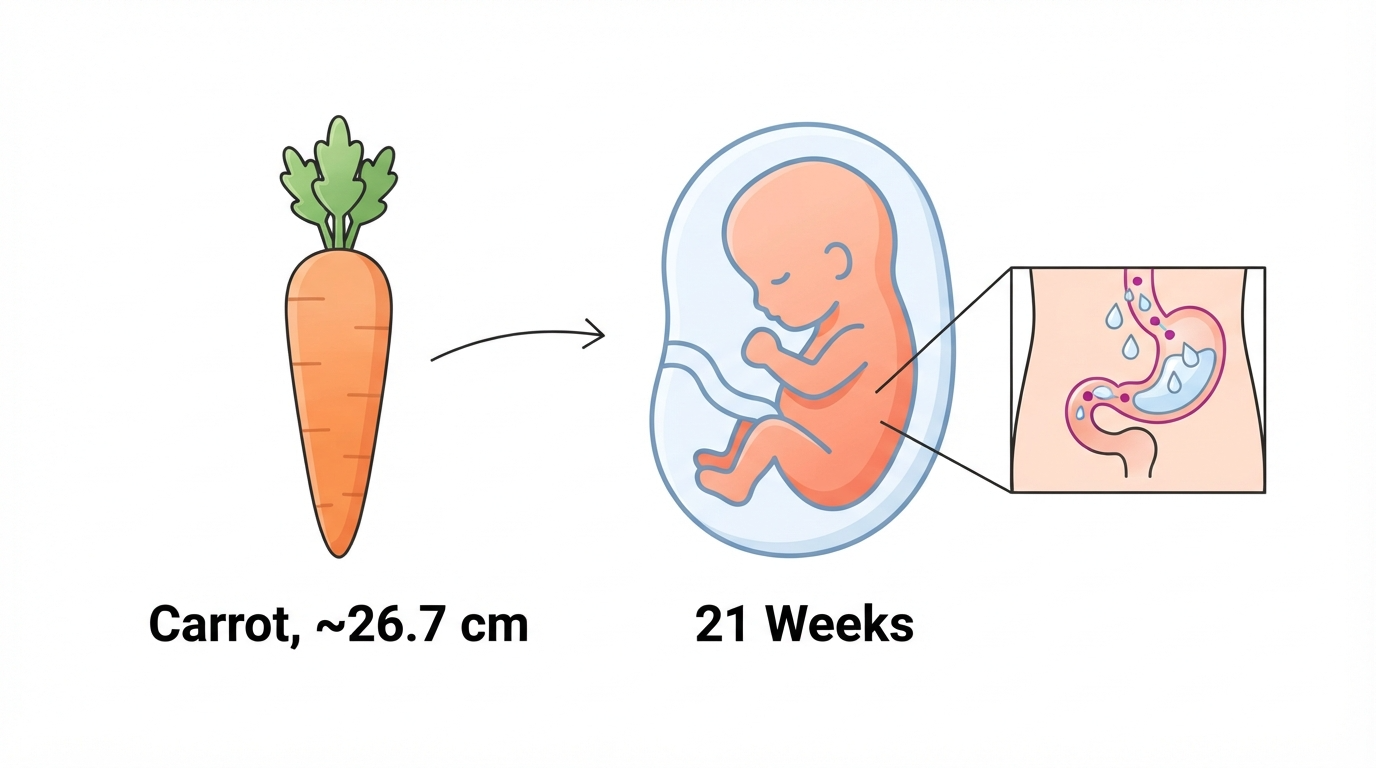
At 21 weeks pregnant, your baby is carrot sized and swallowing more amniotic fluid as taste buds keep developing. Movements are more coordinated now, so kicks and rolls often feel more deliberate than before.
At 21 weeks pregnant, your baby is about the size of a carrot, swallowing more amniotic fluid as the digestive system keeps practicing for life after birth. Limb movements are also becoming more coordinated and frequent this week, so the kicks and rolls you're feeling should start to feel less like flutters and more like distinct nudges.
If your dates feel confusing, remember that gestational age counts from the first day of your last period (LMP), not from conception — so "21 weeks pregnant" usually means about 19 weeks since ovulation. For the full timeline, see our pregnancy week-by-week guide, or find out exactly how your due date is calculated. If you're picking up from last week, catch up on 20 weeks pregnant first.
Key takeaways
- Baby is about the size of a carrot (roughly 26.7 cm, head to heel) and weighs around 360 grams.
- Limb movements are coordinated and frequent this week — kicks and rolls feel more deliberate.
- The digestive system is swallowing more amniotic fluid, and taste buds continue developing.
What "21 Weeks Pregnant" Actually Means
Using standard gestational dating, week 21 starts about 19 weeks after ovulation, placing you in the middle of the second trimester. In fetal-age terms (counting from conception rather than your last period), this is closer to "19 weeks post-conception."
You'll also notice baby-size charts often jump a few centimeters between week 20 and week 21 — that's not a growth spurt overnight. Before around week 20, length is typically measured crown-to-rump (head to bottom); from here on, it's usually measured head-to-heel, which naturally adds several centimeters to the number.
Baby Size at 21 Weeks
At 21 weeks, your baby is about the size of a carrot — roughly 26.7 centimeters long, measured head to heel, and weighing around 360 grams. (Source: Baby Your Baby, Utah Department of Health)
Digestion, Taste Buds, and Steadier Movement
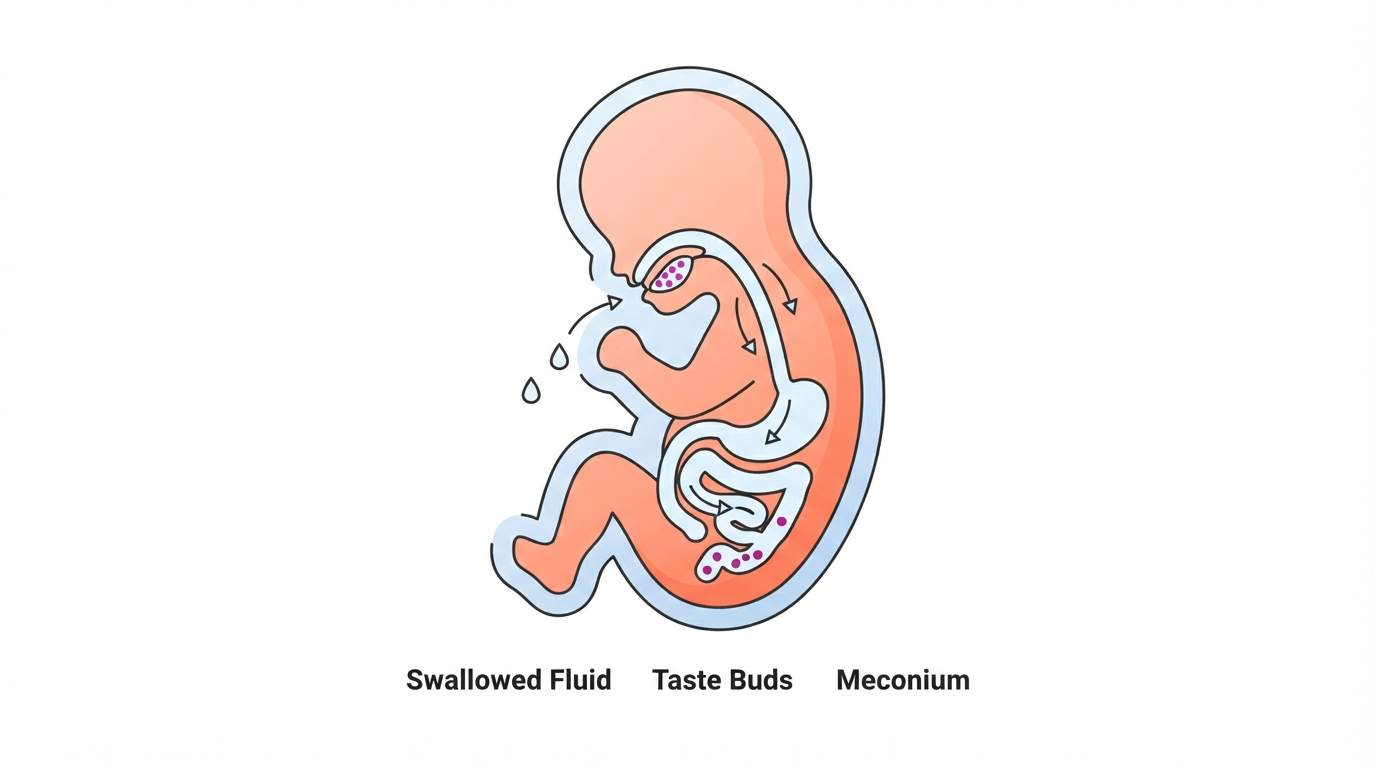
This week, your baby's digestive system is getting more practice. Small amounts of swallowed amniotic fluid pass through the digestive tract, contributing to meconium — a thick, dark, tar-like substance that builds up in the intestines and typically becomes your baby's first bowel movement after birth. Taste buds, which began forming earlier in the second trimester, continue maturing, and some research suggests flavors from your diet can subtly reach the amniotic fluid your baby is swallowing.
At the same time, limb movements are becoming coordinated and more frequent. (Source: Cleveland Clinic) If you've been feeling occasional flutters for the past few weeks, this is often when movement starts to feel more like clear kicks, rolls, and jabs rather than something you have to concentrate to notice.
What You Might Notice at 21 Weeks Pregnant
Week 21 tends to bring a mix of stronger movement and familiar second-trimester changes. Here's what commonly shows up:
Clearer, more frequent movement. Kicks and rolls become easier to distinguish from digestion or muscle twinges.
Increased appetite. Many people notice hunger picking up as the pregnancy's calorie needs continue to rise.
Stretch marks. As the belly keeps expanding, pink or purple stretch marks may appear on the abdomen, hips, or breasts.
Braxton Hicks contractions. Occasional, painless tightening in the belly can continue showing up now and then.
Swelling in the feet and ankles, particularly by the end of the day or in warm weather.
Backaches, as the growing uterus continues to shift your center of gravity.
Leg cramps, especially at night, remain common for some people at this stage.
It's also completely normal to have few or no symptoms yet. Symptom timing and intensity vary widely from person to person and even between pregnancies for the same person.
What's Happening in Your Body
- Limb movements become coordinated and frequent, so kicks and rolls feel more distinct.
- The digestive system swallows more amniotic fluid, contributing to meconium buildup.
- Taste buds continue developing, and flavors from your diet may subtly reach the amniotic fluid.
- Appetite often increases as calorie needs continue rising.
- Stretch marks may start appearing as the belly keeps expanding.
Tips for Week 21
Keep a light record of movement patterns. You don't need to formally count kicks yet, but getting familiar with your baby's typical activity now makes it easier to notice changes later.
Moisturize your belly and hips if stretch marks are bothering you — it won't prevent them, but it can help with itching as skin stretches.
Eat protein- and iron-rich foods to support your increasing calorie and nutrient needs.
Elevate your feet in the evening if mild swelling shows up.
Stay hydrated and stretch calves before bed if leg cramps are an issue.
Keep taking your prenatal vitamin — steady nutrition continues to matter through the second half of pregnancy.
Tips for Partners
- Pay attention during quiet moments — this is a great stretch to feel for kicks together, since movement is becoming more frequent and distinct.
- Help with grocery runs and meal prep as appetite increases and cravings shift.
- Offer a foot rub or help propping up swollen feet in the evening.
- Ask what's changed week to week — a simple check-in can go a long way as symptoms evolve.
FAQ
How big is my baby at 21 weeks pregnant? About the size of a carrot — roughly 26.7 centimeters long, measured head to heel, and weighing around 360 grams.
Why did my baby's length jump so much between week 20 and week 21? Measurements typically switch from crown-to-rump (head to bottom) before around week 20 to head-to-heel afterward, which adds several centimeters even though growth is gradual.
What is meconium? A thick, dark, tar-like substance that builds up in your baby's intestines from swallowed amniotic fluid and other secretions — it's usually your baby's first bowel movement after birth.
Can my baby taste what I eat? Some research suggests flavors from your diet can reach the amniotic fluid, and taste buds are developing around this stage, though the science on how much this influences later preferences is still evolving.
Why does movement feel different this week? Limb movements become more coordinated and frequent around 21 weeks, so kicks and rolls often feel more deliberate than earlier flutters.
What symptoms are normal at 21 weeks pregnant? Clearer movement, increased appetite, stretch marks, Braxton Hicks contractions, mild swelling, backaches, and leg cramps are all common at this stage.
When should I start counting kicks? Most providers introduce formal kick counting later in the third trimester, but getting familiar with your baby's typical movement patterns now makes changes easier to notice going forward.
Pregnancy Checklist at Week 21
- Keep taking a prenatal vitamin daily
- Start noticing your baby's typical movement patterns
- Moisturize your belly and hips if stretch marks appear
- Eat protein- and iron-rich foods to support increasing calorie needs
- Elevate your feet if mild swelling shows up
- Stay hydrated and stretch before bed if leg cramps are an issue
- Note any severe cramping, heavy bleeding, or reduced movement and call your provider if it occurs
Related guides
- 20 Weeks Pregnant: Symptoms, Baby Size & What to Expect — what happened the week before, at the halfway point of pregnancy
- Pregnancy Week by Week: A Complete Guide — see what happens in every week and trimester, from implantation to full term
- How Is Your Due Date Actually Calculated? — the exact formula behind your due date, plus a free calculator
Week 21 brings steadier, more coordinated movement as your baby's digestive system keeps practicing for life outside the womb.
Read related post: 20 Weeks Pregnant: Symptoms, Baby Size & What to Expect
Ready to throw the best reveal?
Create your free Poppit event — invitations, live betting pool, and registry in one link.
Create your event ✨