23 Weeks Pregnant: Symptoms, Baby Size & What to Expect
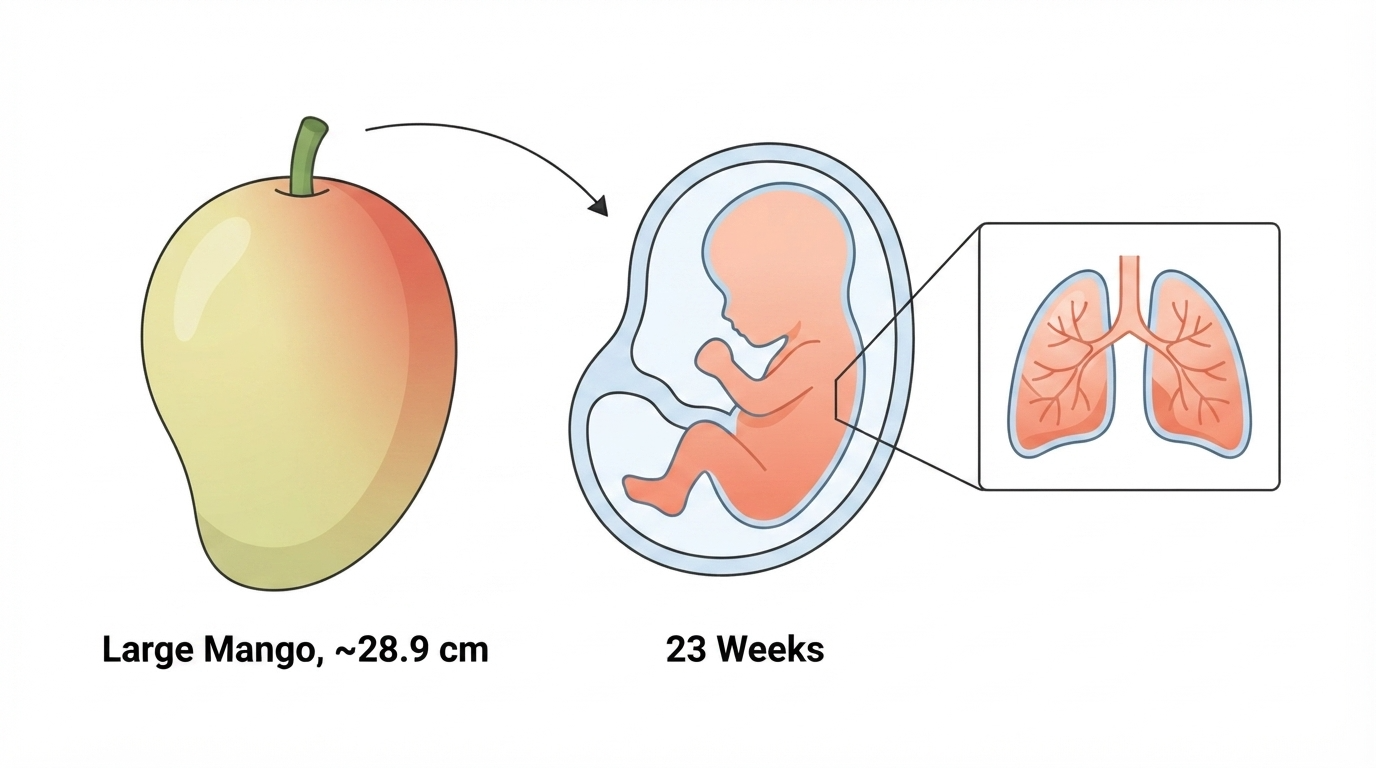
At 23 weeks pregnant, your baby is large mango sized as blood vessels develop in the lungs ahead of viability. This week is sometimes discussed as an early edge of viability with intensive neonatal care, though every case differs.
At 23 weeks pregnant, your baby is about the size of a large mango, and the lungs are busy building out blood vessels that will eventually carry oxygen after birth. It's an early but meaningful step in lung development — the lungs themselves are still weeks away from being ready to work on their own.
If your dates feel confusing, remember that gestational age counts from the first day of your last period (LMP), not from conception — so "23 weeks pregnant" usually means about 21 weeks since ovulation. For the full timeline, see our pregnancy week-by-week guide, or find out exactly how your due date is calculated. If you're picking up from last week, catch up on 22 weeks pregnant first.
Key takeaways
- Baby is about the size of a large mango (roughly 28.9 cm, head to heel) and weighs around 501 grams.
- Blood vessels are developing in the lungs, an early step toward breathing on their own.
- This week is often discussed as an early edge of viability with intensive neonatal care, though every situation is different.
What "23 Weeks Pregnant" Actually Means
Using standard gestational dating, week 23 starts about 21 weeks after ovulation, placing you in the final stretch of the second trimester. In fetal-age terms (counting from conception rather than your last period), this is closer to "21 weeks post-conception."
For most pregnancies, this week passes like any other — a routine stretch of the second trimester with no special appointments attached. It's mentioned here mainly because it's a week that sometimes comes up in conversations about premature birth, not because anything is expected to happen.
Baby Size at 23 Weeks
At 23 weeks, your baby is about the size of a large mango — roughly 28.9 centimeters long, measured head to heel, and weighing around 501 grams. (Source: Baby Your Baby, Utah Department of Health)
Lung Development and an Early Edge of Viability
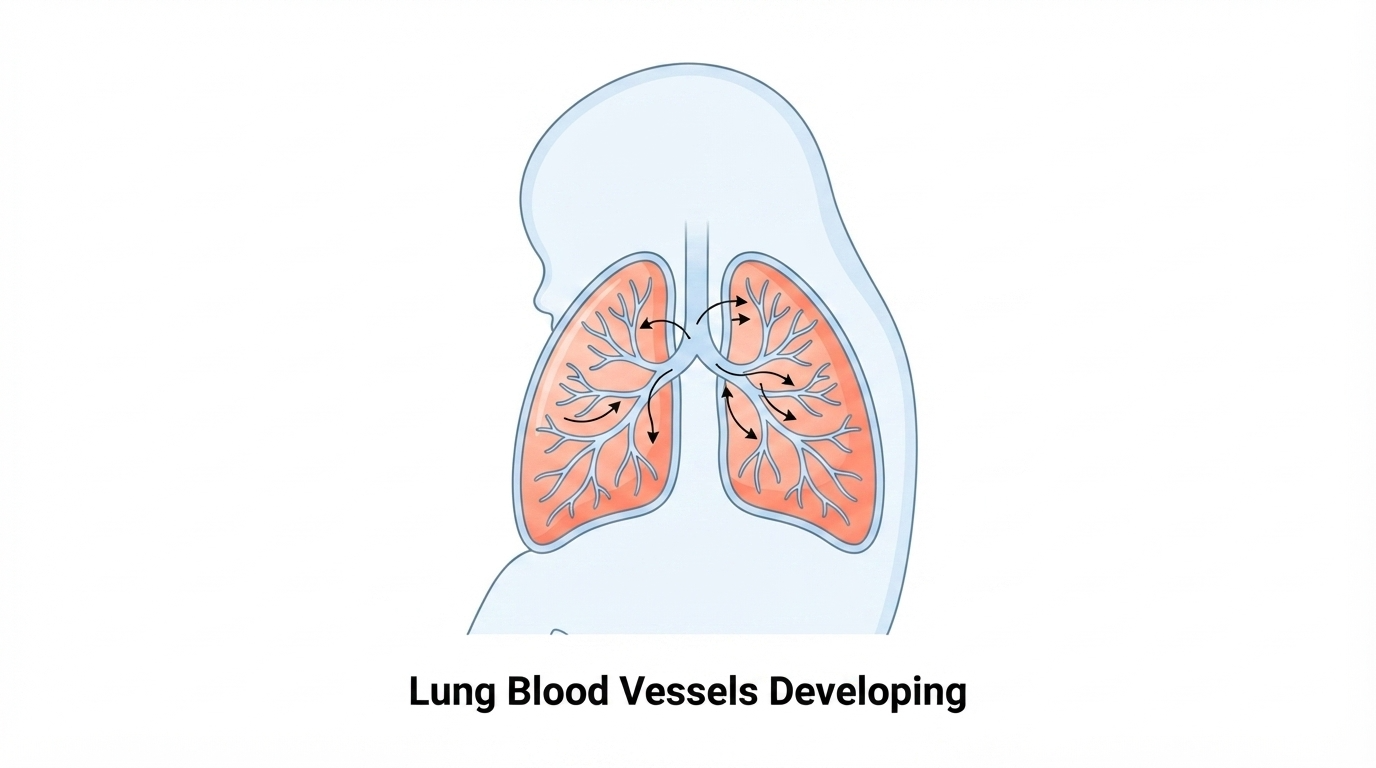
This week, blood vessels are developing within the lungs — a necessary early building block for the lungs to eventually exchange oxygen and carbon dioxide on their own. The lungs are still structurally immature and won't be ready to function outside the uterus for a number of weeks yet.
Week 23 is sometimes mentioned in medical literature as an early point at which a baby born prematurely may survive with intensive neonatal care. (Source: Cleveland Clinic) Outcomes at this stage vary enormously and depend on many factors your care team would walk you through directly — this is general background information, not a reason for concern in a typical, uncomplicated pregnancy. If you have any worries about preterm labor, your OB or midwife is the right person to talk to.
What You Might Notice at 23 Weeks Pregnant
Week 23 tends to bring familiar second-trimester changes alongside a growing, more active belly. Here's what commonly shows up:
Stronger, more frequent movement. Kicks and rolls continue becoming easier to feel and track.
Braxton Hicks contractions, appearing as occasional, painless tightening in the belly.
Swelling in the feet and ankles, especially by the end of the day or in warm weather.
Stretch marks, as the belly, hips, and breasts continue expanding.
Backaches, as your center of gravity keeps shifting forward.
Heartburn, which can become more noticeable as the uterus presses upward.
Trouble getting comfortable at night, as the belly grows large enough to limit sleeping positions.
It's also completely normal to have few or no symptoms yet. Symptom timing and intensity vary widely from person to person and even between pregnancies for the same person.
What's Happening in Your Body
- Blood vessels develop in the lungs, an early step toward eventual breathing.
- This week is sometimes referenced as an early edge of viability with intensive neonatal care, though a typical pregnancy continues uneventfully.
- Movement becomes stronger and more frequent.
- The belly continues expanding, which can bring stretch marks and sleep discomfort.
- Heartburn may become more noticeable as the uterus presses on the stomach.
Tips for Week 23
Try sleeping on your side with a pillow between your knees if getting comfortable at night is a struggle.
Eat smaller, more frequent meals to help manage heartburn.
Elevate your feet in the evening if mild swelling shows up.
Moisturize your belly and hips if stretch marks are bothering you.
Know the signs of preterm labor — regular contractions, pelvic pressure, low back pain, or fluid leaking — and call your provider if you notice them, even though they're uncommon at this stage.
Keep taking your prenatal vitamin — steady nutrition continues to matter through the second half of pregnancy.
Tips for Partners
- Help set up a comfortable sleep station, like extra pillows for side-sleeping support.
- Learn the signs of preterm labor together, so you both know when to call the provider even though it's uncommon.
- Take over spicy or acidic-meal duty if heartburn is flaring up.
- Check in on mood and comfort, not just physical symptoms — this stretch can bring a lot of change at once.
FAQ
How big is my baby at 23 weeks pregnant? About the size of a large mango — roughly 28.9 centimeters long, measured head to heel, and weighing around 501 grams.
What's developing in the lungs at 23 weeks? Blood vessels are developing within the lungs, an early building block for eventually exchanging oxygen after birth — the lungs themselves are still structurally immature at this stage.
Is 23 weeks considered a viability milestone? It's sometimes mentioned as an early point at which a baby born prematurely may survive with intensive neonatal care, but this is general background information, not a typical concern for an uncomplicated pregnancy.
What are the signs of preterm labor I should know about? Regular contractions, pelvic pressure, low back pain, or fluid leaking are signs to call your provider about, even though preterm labor is uncommon at this stage.
What symptoms are normal at 23 weeks pregnant? Stronger movement, Braxton Hicks contractions, swelling, stretch marks, backaches, heartburn, and trouble sleeping are all common at this stage.
Why is heartburn getting worse? As the uterus grows and presses upward on the stomach, acid reflux often becomes more noticeable through the second half of pregnancy.
When is my next prenatal appointment likely to be? Many providers continue with appointments roughly every four weeks through the rest of the second trimester, though your provider will confirm your specific schedule.
Pregnancy Checklist at Week 23
- Keep taking a prenatal vitamin daily
- Try side-sleeping with a pillow between your knees for comfort
- Eat smaller, more frequent meals to help manage heartburn
- Elevate your feet if mild swelling shows up
- Moisturize your belly and hips if stretch marks appear
- Learn the signs of preterm labor to know when to call your provider
- Note any severe cramping, heavy bleeding, or reduced movement and call your provider if it occurs
Related guides
- 22 Weeks Pregnant: Symptoms, Baby Size & What to Expect — what happened the week before, as facial features finished forming
- Pregnancy Week by Week: A Complete Guide — see what happens in every week and trimester, from implantation to full term
- How Is Your Due Date Actually Calculated? — the exact formula behind your due date, plus a free calculator
Week 23 is a quiet but meaningful stretch of lung development, as blood vessels build the groundwork your baby will need to breathe independently down the road.
Read related post: 22 Weeks Pregnant: Symptoms, Baby Size & What to Expect
Ready to throw the best reveal?
Create your free Poppit event — invitations, live betting pool, and registry in one link.
Create your event ✨