28 Weeks Pregnant: Symptoms, Baby Size & What to Expect
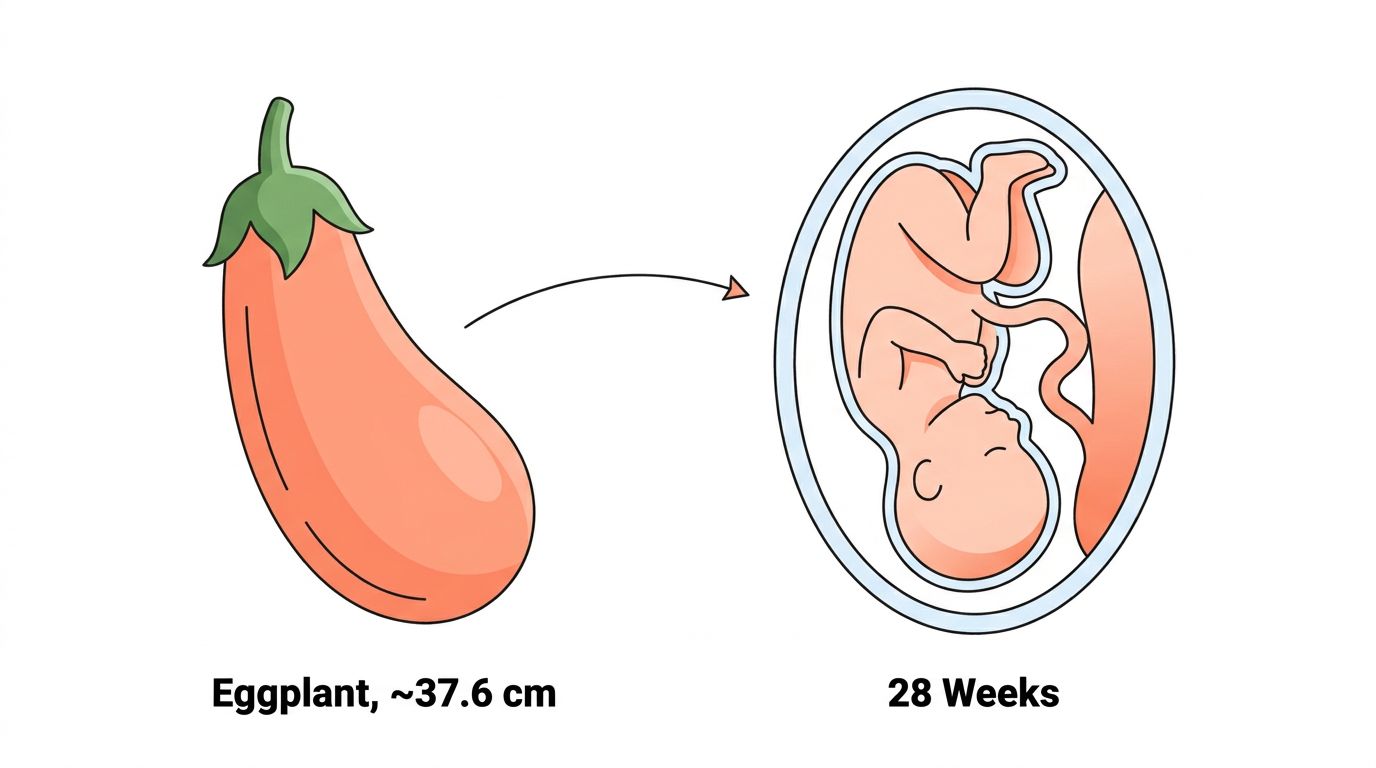
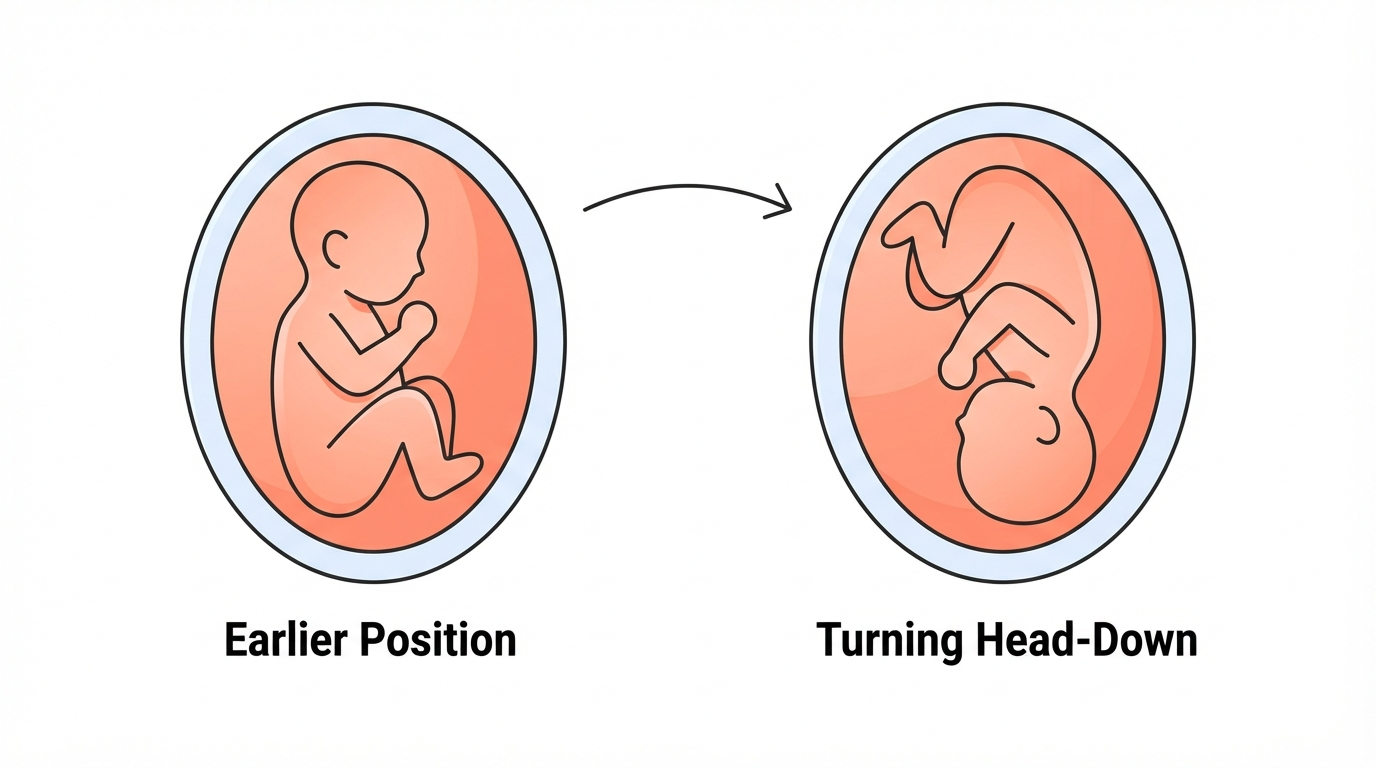
At 28 weeks pregnant, your baby is eggplant sized and you've reached the start of the third trimester. Baby may also begin turning head-down in the uterus, getting into position ahead of birth.
At 28 weeks pregnant, your baby is about the size of an eggplant, and you've officially reached the start of the third trimester — the home stretch of pregnancy. Your baby may also start turning head-down this week, settling into position ahead of birth, though there's plenty of time left to shift around.
If your dates feel confusing, remember that gestational age counts from the first day of your last period (LMP), not from conception — so "28 weeks pregnant" usually means about 26 weeks since ovulation. For the full timeline, see our pregnancy week-by-week guide, or find out exactly how your due date is calculated. If you're picking up from last week, catch up on 27 weeks pregnant first.
Key takeaways
- Baby is about the size of an eggplant (roughly 37.6 cm, head to heel) and weighs around 1,005 grams — just over 2 pounds.
- You've reached the start of the third trimester.
- Baby may begin turning head-down in the uterus in preparation for birth.
What "28 Weeks Pregnant" Actually Means
Using standard gestational dating, week 28 starts about 26 weeks after ovulation, and marks the start of the third trimester using the common weeks-1–13/14–27/28–40 convention. In fetal-age terms (counting from conception rather than your last period), this is closer to "26 weeks post-conception."
Reaching the third trimester is a meaningful checkpoint — from here, prenatal visits typically become more frequent, and your baby's growth accelerates quickly heading toward birth.
Baby Size at 28 Weeks
At 28 weeks, your baby is about the size of an eggplant — roughly 37.6 centimeters long, measured head to heel, and weighing around 1,005 grams, just over 2 pounds. (Source: Baby Your Baby, Utah Department of Health)
Turning Head-Down and What Changes in the Third Trimester
This week, your baby may begin turning head-down in the uterus, an early step toward the position most babies eventually settle into for birth. (Source: Cleveland Clinic) There's no need to worry if that hasn't happened yet — babies often shift position multiple times over the coming weeks, and most don't settle into a final position until closer to labor.
The third trimester also typically brings a change in your prenatal visit schedule. Many providers move from monthly visits to appointments every two weeks starting around now, then weekly once you reach 36 weeks. (General guidance — confirm specifics with your provider: ACOG) If you're Rh-negative, this is also a common window for a RhoGAM shot, and if your gestational diabetes screening is still outstanding, week 28 is the outer edge of the typical 24-to-28 week window — our gestational diabetes guide has the details.
What You Might Notice at 28 Weeks Pregnant
Week 28 tends to bring a mix of third-trimester milestones and familiar late-pregnancy symptoms. Here's what commonly shows up:
More frequent Braxton Hicks contractions, appearing as occasional, painless tightening in the belly.
Backaches, as your center of gravity continues shifting forward.
Shortness of breath, as the growing uterus presses up against the diaphragm.
Swelling in the feet and ankles, especially by the end of the day.
Trouble sleeping, as the belly grows large enough to limit comfortable positions.
Leaking colostrum, a thick, early form of breast milk some people notice starting around now.
Vivid dreams or trouble concentrating, which some people report more often in the third trimester.
It's also completely normal to have few or no symptoms yet. Symptom timing and intensity vary widely from person to person and even between pregnancies for the same person.
What's Happening in Your Body
- You reach the start of the third trimester.
- Baby may begin turning head-down, an early step toward birth positioning.
- Prenatal visits typically become more frequent, often every two weeks starting around now.
- RhoGAM may be given this week if you're Rh-negative.
- The gestational diabetes screening window typically closes around now, if not done already.
Tips for Week 28
Ask your provider about your updated visit schedule heading into the third trimester.
Ask about RhoGAM if you know or suspect you're Rh-negative.
Complete your gestational diabetes screening if you haven't already.
Elevate your feet in the evening if mild swelling shows up.
Start researching childbirth classes if you're interested — many run for several weeks, so earlier is easier to schedule.
Keep taking your prenatal vitamin — steady nutrition continues to matter through the rest of pregnancy.
Tips for Partners
- Help track the updated appointment schedule as visits become more frequent.
- Ask about childbirth classes together and get them on the calendar.
- Take over more physical chores as shortness of breath and fatigue increase.
- Mark the start of the third trimester — it's a meaningful milestone worth acknowledging together.
FAQ
How big is my baby at 28 weeks pregnant? About the size of an eggplant — roughly 37.6 centimeters long, measured head to heel, and weighing around 1,005 grams, just over 2 pounds.
Am I in the third trimester at 28 weeks? Yes, using the common weeks-1–13/14–27/28–40 convention, week 28 marks the start of the third trimester.
Has my baby settled into their final position yet? Not necessarily — babies often shift position multiple times through the third trimester, and most don't settle into a final position until closer to labor.
What is RhoGAM, and do I need it? RhoGAM is a shot given to Rh-negative people to prevent complications from Rh incompatibility — your provider will let you know if it applies to you, often around this stage.
How often will my prenatal appointments be now? Many providers move to appointments every two weeks starting around the third trimester, then weekly closer to 36 weeks, though your provider will confirm your specific schedule.
What symptoms are normal at 28 weeks pregnant? More frequent Braxton Hicks contractions, backaches, shortness of breath, swelling, trouble sleeping, leaking colostrum, and vivid dreams are all common at this stage.
What is colostrum? A thick, nutrient-rich early form of breast milk that some people notice leaking starting in the third trimester — it's normal, and not everyone experiences it before birth.
Pregnancy Checklist at Week 28
- Keep taking a prenatal vitamin daily
- Ask your provider about your updated third-trimester visit schedule
- Ask about RhoGAM if you're Rh-negative
- Complete your gestational diabetes screening if you haven't already
- Elevate your feet if mild swelling shows up
- Look into childbirth classes if you're interested
- Note any severe cramping, heavy bleeding, or reduced movement and call your provider if it occurs
Related guides
- 27 Weeks Pregnant: Symptoms, Baby Size & What to Expect — what happened the week before, as eyes opened for the first time
- Gestational Diabetes: What You Need to Know — what the screening involves and what a diagnosis means
- Pregnancy Week by Week: A Complete Guide — see what happens in every week and trimester, from implantation to full term
Week 28 marks the start of the third trimester, with your baby beginning to turn head-down and your prenatal visit schedule picking up pace.
Read related post: 27 Weeks Pregnant: Symptoms, Baby Size & What to Expect
Ready to throw the best reveal?
Create your free Poppit event — invitations, live betting pool, and registry in one link.
Create your event ✨