31 Weeks Pregnant: Symptoms, Baby Size & What to Expect
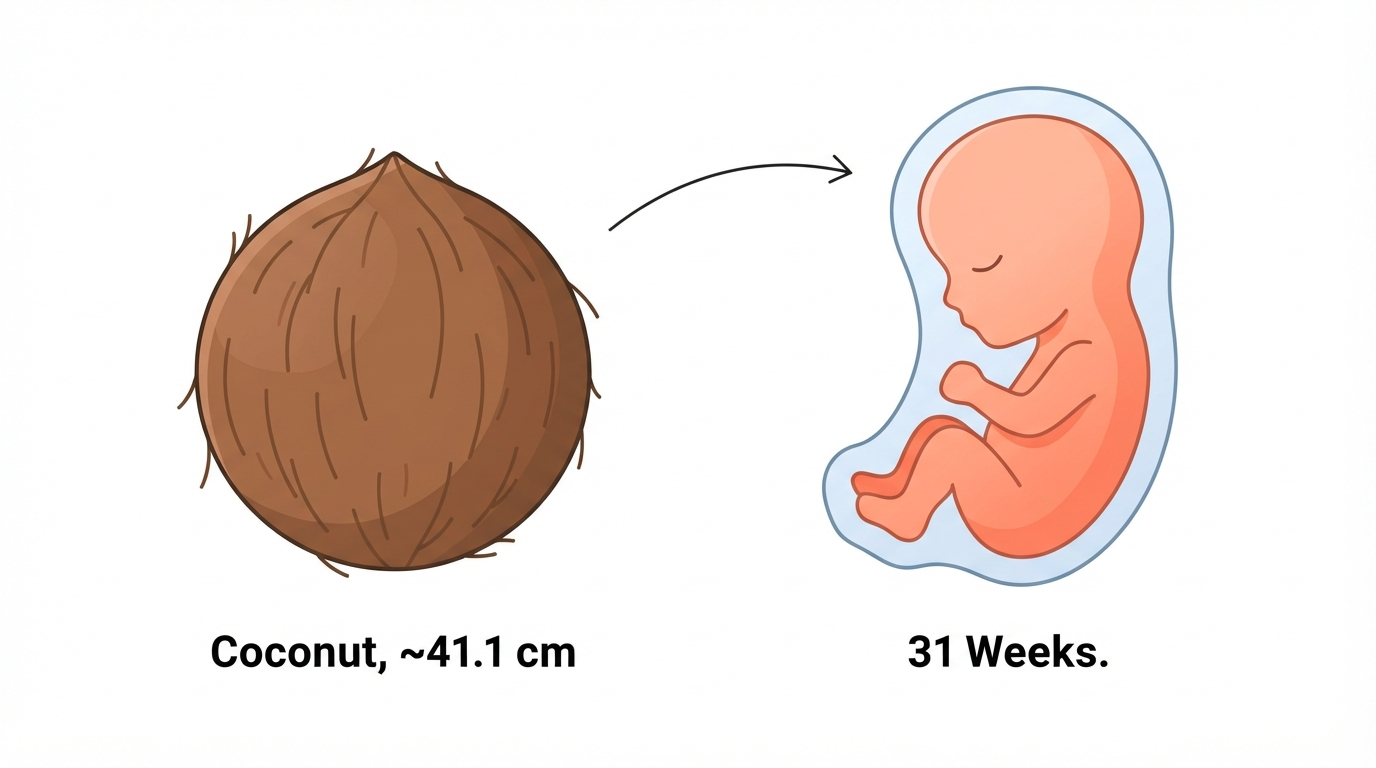
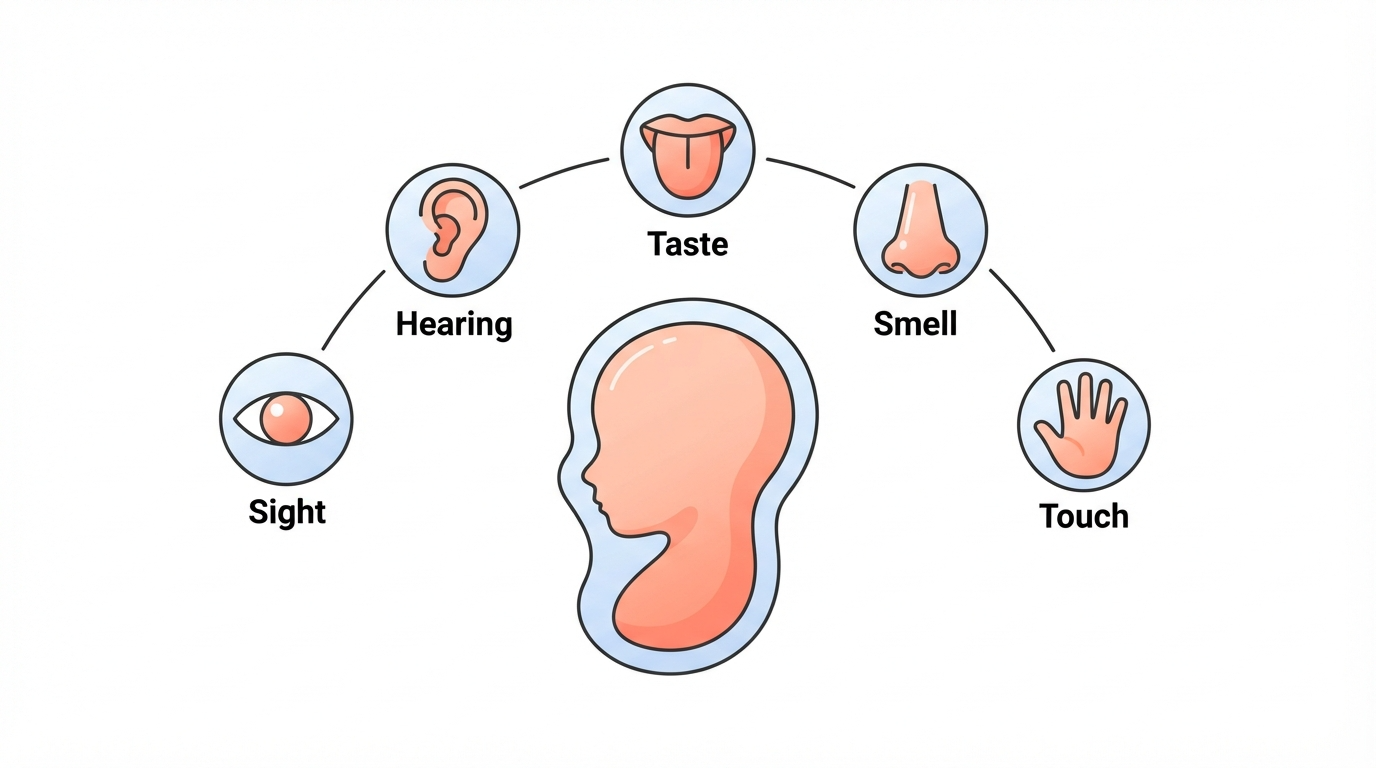
At 31 weeks pregnant, your baby is coconut sized as all five senses grow more active and the brain processes more stimuli. With about nine weeks to go, baby's senses are sharpening fast, taking in more of the world by the day.
At 31 weeks pregnant, your baby is about the size of a coconut, and all five senses are increasingly active as the brain works harder to process everything coming in. Nine weeks (give or take) to go, and this is often when the third trimester starts to feel physically real in a new way.
If your dates feel confusing, remember that gestational age counts from the first day of your last period (LMP), not from conception — so "31 weeks pregnant" usually means about 29 weeks since ovulation. For the full timeline, see our pregnancy week-by-week guide, or find out exactly how your due date is calculated. If you're picking up from last week, catch up on 30 weeks pregnant first.
Key takeaways
- Baby is about the size of a coconut (roughly 41.1 cm, head to heel) and weighs around 1,502 grams.
- All five senses are increasingly active, and the brain is processing more information and stimuli.
- About 9 weeks remain until a typical full-term due date.
What "31 Weeks Pregnant" Actually Means
Using standard gestational dating, week 31 starts about 29 weeks after ovulation, placing you firmly in the third trimester. In fetal-age terms (counting from conception rather than your last period), this is closer to "29 weeks post-conception."
With roughly 9 weeks left until a typical 40-week due date, this is often when appointments start becoming more frequent and the finish line starts to feel closer than the starting line.
Baby Size at 31 Weeks
At 31 weeks, your baby is about the size of a coconut — roughly 41.1 centimeters long, measured head to heel, and weighing around 1,502 grams. (Source: Baby Your Baby, Utah Department of Health)
Senses Sharpening and a Busier Brain
This week, your baby's brain is doing more work to process information and stimuli, and sleep-wake patterns are becoming more recognizable and consistent. (Source: Cleveland Clinic) Hearing, taste, and touch have all been developing for weeks already, and by this stage they're increasingly active — your baby may respond to loud sounds, bright light through the abdominal wall, or the taste of amniotic fluid, which shifts slightly depending on what you eat.
This growing sensory awareness is part of why some babies seem to have preferences even before birth — startling at sudden noises, or settling down when they hear a familiar voice. It's also a sign that the brain is maturing quickly, laying groundwork for the rapid sensory development that continues after birth.
What You Might Notice at 31 Weeks Pregnant
Week 31 tends to bring a mix of a growing belly and the physical demands of late pregnancy. Here's what commonly shows up:
More frequent Braxton Hicks contractions, felt as tightening across the belly that comes and goes without a regular pattern.
Shortness of breath, as the uterus keeps pressing up against the diaphragm.
Backaches, as your center of gravity continues shifting forward.
Trouble finding a comfortable sleep position, as the belly grows large enough to limit your options.
Heartburn or indigestion, as the growing uterus pushes up against your stomach.
Looser joints, thanks to the hormone relaxin, which can make you feel a bit less steady on your feet.
Swelling in the feet and ankles, especially by the end of the day.
It's also completely normal to have few or no symptoms yet. Symptom timing and intensity vary widely from person to person and even between pregnancies for the same person.
What's Happening in Your Body
- All five senses are increasingly active, and the brain is processing more stimuli.
- Sleep-wake patterns are becoming more recognizable and consistent.
- Bones continue hardening, with the exception of the skull.
- About 9 weeks remain until a typical full-term due date.
- Braxton Hicks and joint looseness often increase as your body prepares for the final stretch.
Tips for Week 31
Eat smaller, more frequent meals if heartburn is bothering you, and avoid lying down right after eating.
Move carefully, especially on stairs or uneven ground, since loosened joints can affect your balance.
Try a pregnancy pillow if you're struggling to find a comfortable sleep position.
Track Braxton Hicks patterns so you can tell your provider if they start feeling more regular or painful.
Keep taking your prenatal vitamin — steady nutrition continues to matter through the rest of pregnancy.
Start thinking about your birth plan and hospital bag, if you haven't already, since the final weeks tend to move quickly.
Tips for Partners
- Watch for signs of heartburn or discomfort after meals and help plan lighter, more frequent meals together.
- Be extra mindful during walks or errands since balance can be a little off with looser joints.
- Help track Braxton Hicks contractions if your partner wants a second set of eyes on timing.
- Start finalizing hospital bag or birth plan logistics together.
FAQ
How big is my baby at 31 weeks pregnant? About the size of a coconut — roughly 41.1 centimeters long, measured head to heel, and weighing around 1,502 grams.
Are all five senses working at 31 weeks? They're increasingly active. Hearing, taste, and touch have been developing for weeks, and by 31 weeks the brain is processing more of that sensory information than before.
Why do my joints feel looser this week? The hormone relaxin loosens ligaments and joints to help prepare your body for delivery, which can also make you feel a bit less steady on your feet.
Is it normal to have more Braxton Hicks contractions now? Yes, many people notice more frequent Braxton Hicks contractions in the third trimester. They should be irregular and painless — contact your provider if they become regular, painful, or occur before 37 weeks.
What symptoms are normal at 31 weeks pregnant? Braxton Hicks contractions, shortness of breath, backaches, trouble sleeping, heartburn, looser joints, and swelling are all common at this stage.
How many weeks do I have left at 31 weeks pregnant? About 9 weeks remain until a typical 40-week due date, though every pregnancy's timeline is a little different.
When is my next prenatal appointment likely to be? Many providers move to appointments every two weeks around this stage of the third trimester, then weekly closer to 36 weeks.
Pregnancy Checklist at Week 31
- Keep taking a prenatal vitamin daily
- Eat smaller, more frequent meals if heartburn shows up
- Try a pregnancy pillow for better sleep positioning
- Track Braxton Hicks contractions and their pattern
- Move carefully on stairs or uneven ground as joints loosen
- Start finalizing your hospital bag or birth plan
- Note any regular contractions, heavy bleeding, or reduced movement and call your provider if it occurs
Related guides
- 30 Weeks Pregnant: Symptoms, Baby Size & What to Expect — what happened the week before, as the brain developed rapid grooves and folds
- Pregnancy Week by Week: A Complete Guide — see what happens in every week and trimester, from implantation to full term
- How Is Your Due Date Actually Calculated? — the exact formula behind your due date, plus a free calculator
Week 31 brings sharpening senses and a busier brain, with roughly 9 weeks left until a typical due date and the third trimester in full swing.
Read related post: 30 Weeks Pregnant: Symptoms, Baby Size & What to Expect
Ready to throw the best reveal?
Create your free Poppit event — invitations, live betting pool, and registry in one link.
Create your event ✨