36 Weeks Pregnant: Symptoms, Baby Size & What to Expect
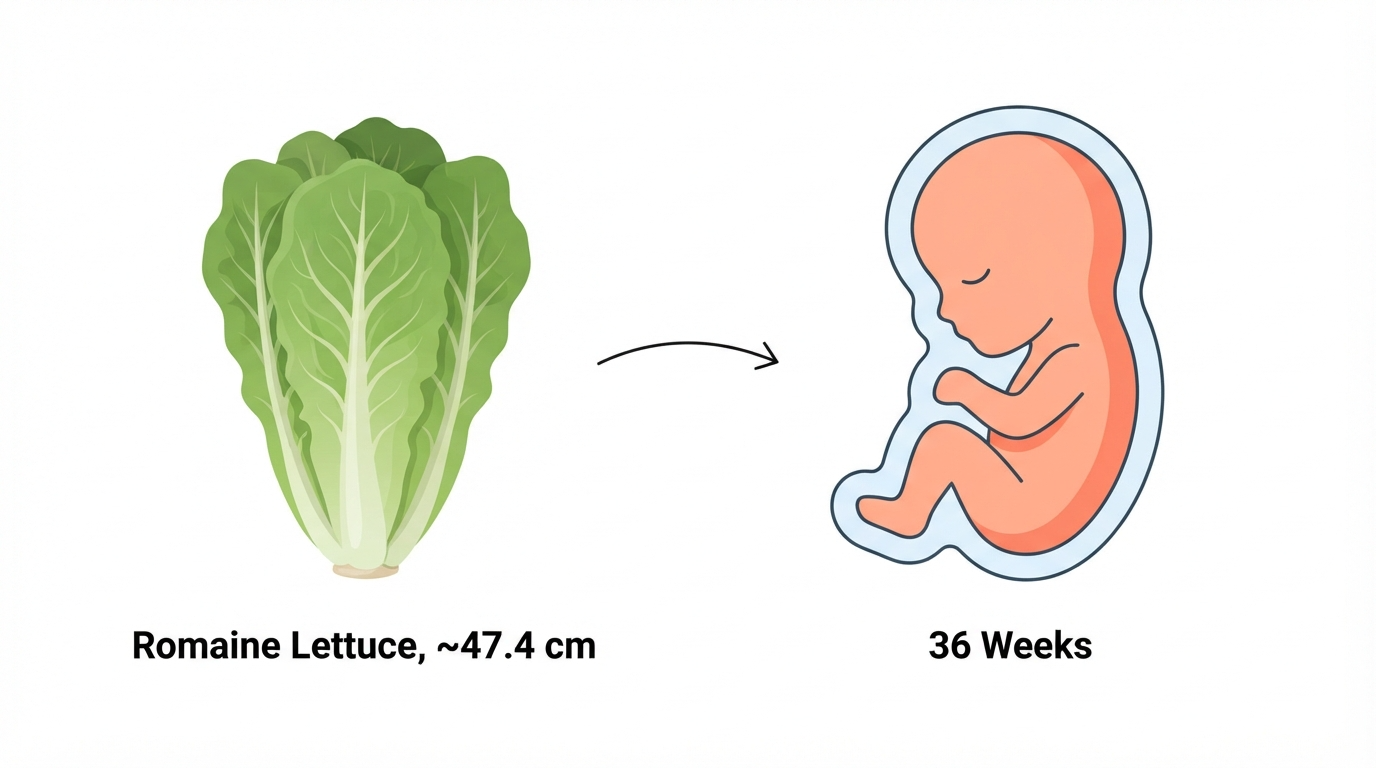
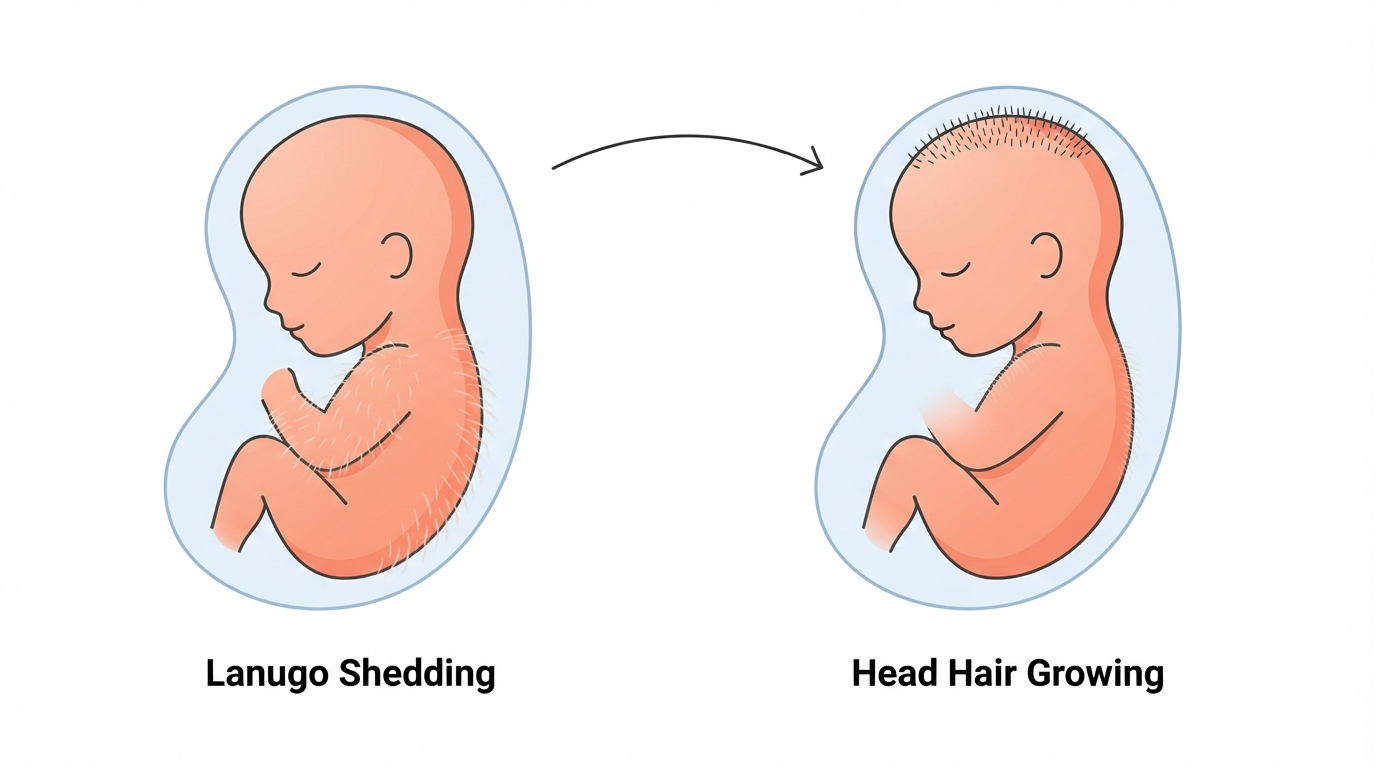
At 36 weeks pregnant, your baby is romaine lettuce length as the fine lanugo hair sheds and head hair develops. Shedding lanugo and growing head hair mark another late-pregnancy milestone, with roughly four weeks left on the clock.
At 36 weeks pregnant, your baby is about as long as a romaine lettuce, and the fine body hair called lanugo is shedding as head hair develops. Four weeks (give or take) to go, and this is often when things start to feel imminent in a new way.
If your dates feel confusing, remember that gestational age counts from the first day of your last period (LMP), not from conception — so "36 weeks pregnant" usually means about 34 weeks since ovulation. For the full timeline, see our pregnancy week-by-week guide, or find out exactly how your due date is calculated. If you're picking up from last week, catch up on 35 weeks pregnant first.
Key takeaways
- Baby is about as long as a romaine lettuce (roughly 47.4 cm, head to heel) and weighs around 2,622 grams.
- The fine body hair (lanugo) is shedding, while head hair continues developing.
- About 4 weeks remain until a typical full-term due date.
What "36 Weeks Pregnant" Actually Means
Using standard gestational dating, week 36 starts about 34 weeks after ovulation, placing you right at the edge of "early term." In fetal-age terms (counting from conception rather than your last period), this is closer to "34 weeks post-conception."
With roughly 4 weeks left until a typical 40-week due date, many providers now switch to weekly appointments through the rest of pregnancy.
Baby Size at 36 Weeks
At 36 weeks, your baby is about as long as a romaine lettuce — roughly 47.4 centimeters, measured head to heel — and weighs around 2,622 grams. (Source: Baby Your Baby, Utah Department of Health)
Shedding Lanugo, Growing Head Hair
This week, the fine, downy body hair called lanugo — which has covered your baby's skin for months, helping vernix stick to the skin — is largely shedding, while head hair continues to develop. (Source: Cleveland Clinic) Some lanugo can still be present at birth, especially in babies born a little early, and it typically finishes shedding in the days or weeks after delivery if any remains.
Many babies also begin settling head-down into the pelvis around this stage in preparation for birth, sometimes called "lightening" or "dropping." If it happens, you may notice you can breathe a little easier as pressure eases off your diaphragm — though it often comes with more pressure lower down instead.
What You Might Notice at 36 Weeks Pregnant
Week 36 tends to bring a mix of a growing belly and the physical demands of late pregnancy. Here's what commonly shows up:
"Lightening," or your baby dropping lower into the pelvis, which some people feel as a shift in belly shape.
Increased pelvic pressure, as your baby settles lower.
Easier breathing, if your baby has dropped and eased pressure on your diaphragm.
More frequent urination, as the growing pressure on your bladder increases.
Braxton Hicks contractions, appearing as occasional, painless tightening in the belly, sometimes more noticeable now.
Trouble sleeping, as the belly grows large enough to limit comfortable positions.
Swelling in the feet and ankles, especially by the end of the day.
It's also completely normal to have few or no symptoms yet. Symptom timing and intensity vary widely from person to person and even between pregnancies for the same person.
What's Happening in Your Body
- Lanugo (fine body hair) is largely shedding.
- Head hair continues developing.
- Many babies begin settling head-down into the pelvis.
- About 4 weeks remain until a typical full-term due date.
- Weekly prenatal appointments often begin around now.
Tips for Week 36
Ask about your Group B strep test if it hasn't happened yet — it's typically done between 36 and 37 weeks.
Pack a going-home outfit for your baby, along with anything else missing from your hospital bag.
Practice pelvic floor exercises if pelvic pressure is bothering you, if your provider has given the go-ahead.
Keep taking your prenatal vitamin — steady nutrition continues to matter through the rest of pregnancy.
Review the signs of labor with your provider so you know what to watch for.
Tips for Partners
- Learn the signs of labor together so you both feel prepared when the time comes.
- Make sure the car is fueled up and the route to the hospital or birth center is clear in your mind.
- Take over more household tasks as pelvic pressure and fatigue increase.
- Double-check the hospital bag together, including a going-home outfit for the baby.
FAQ
How big is my baby at 36 weeks pregnant? About as long as a romaine lettuce — roughly 47.4 centimeters, measured head to heel — and weighing around 2,622 grams.
What is lanugo, and is it gone by now? Lanugo is the fine, downy body hair that's covered your baby's skin for months. It's largely shedding by 36 weeks, though some can still be present at birth, especially in babies born a bit early.
What does it mean when people say the baby has "dropped"? This is called lightening — your baby settling head-down lower into the pelvis in preparation for birth. It can ease pressure on your diaphragm, sometimes making breathing feel easier, while adding pressure lower down.
Is my baby considered full term at 36 weeks? Not quite — "early term" begins at 37 weeks, and "full term" starts at 39 weeks. At 36 weeks, your baby is still considered preterm, though generally doing well developmentally.
Why do I need weekly appointments now? As you get closer to your due date, your provider checks more frequently for signs of labor, your baby's position, and other details that can change quickly in these final weeks.
What symptoms are normal at 36 weeks pregnant? Lightening, pelvic pressure, frequent urination, Braxton Hicks contractions, trouble sleeping, and swelling are all common at this stage.
How many weeks do I have left at 36 weeks pregnant? About 4 weeks remain until a typical 40-week due date, though every pregnancy's timeline is a little different.
Pregnancy Checklist at Week 36
- Keep taking a prenatal vitamin daily
- Complete your Group B strep test if not already done
- Pack a going-home outfit for your baby
- Review the signs of labor with your provider
- Confirm your route to the hospital or birth center
- Rest and manage pelvic pressure as your baby settles lower
- Note any regular contractions, heavy bleeding, or reduced movement and call your provider if it occurs
Related guides
- 35 Weeks Pregnant: Symptoms, Baby Size & What to Expect — what happened the week before, as the kidneys finished developing
- Pregnancy Week by Week: A Complete Guide — see what happens in every week and trimester, from implantation to full term
- How Is Your Due Date Actually Calculated? — the exact formula behind your due date, plus a free calculator
Week 36 brings shedding lanugo and, for many babies, settling into position for birth, with roughly 4 weeks left until a typical due date.
Read related post: 35 Weeks Pregnant: Symptoms, Baby Size & What to Expect
Ready to throw the best reveal?
Create your free Poppit event — invitations, live betting pool, and registry in one link.
Create your event ✨