39 Weeks Pregnant: Symptoms, Baby Size & What to Expect
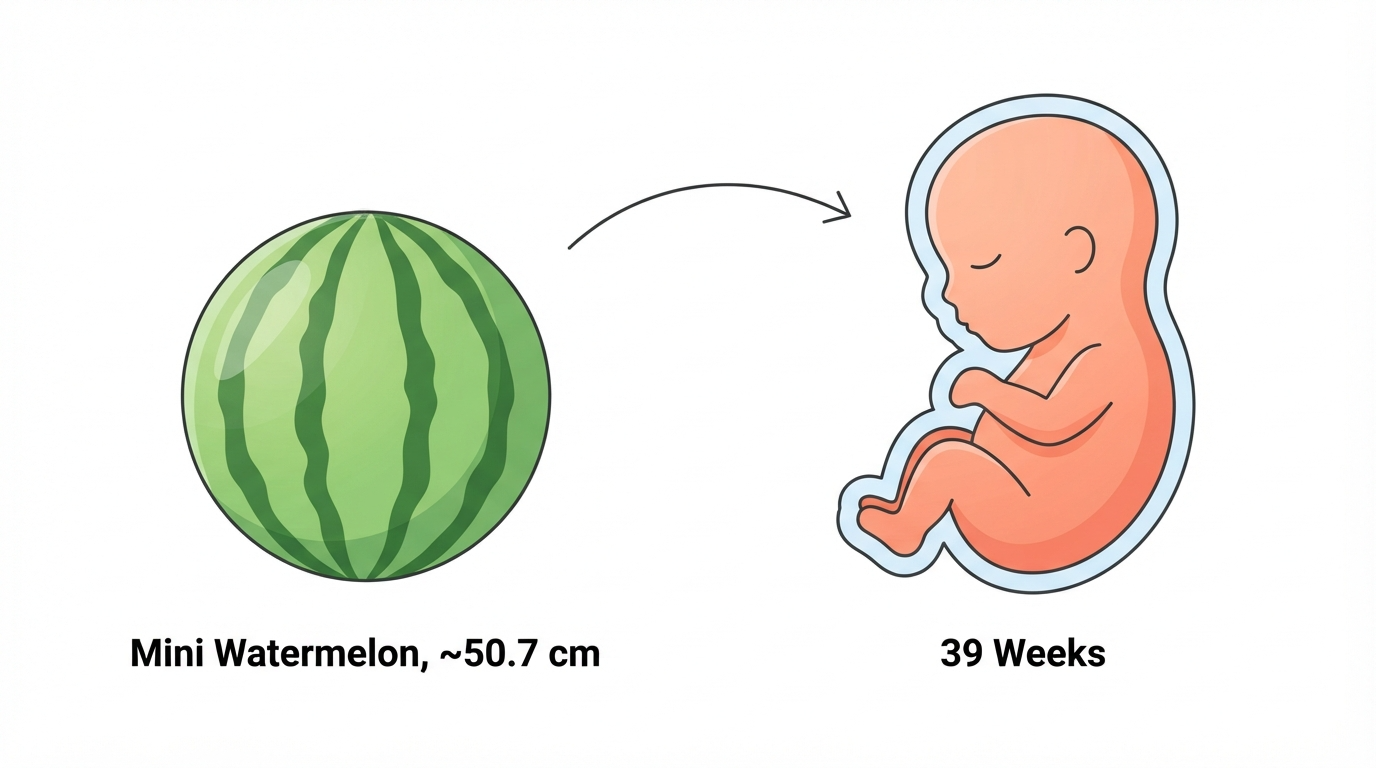
At 39 weeks pregnant, your baby is mini watermelon sized and considered full term, with organs ready for life outside the womb. Only about a week remains until your official due date, though 37 to 42 weeks is considered normal.
At 39 weeks pregnant, your baby is about the size of a mini watermelon, and is now officially considered full term, with organs largely ready for life outside the womb. One week (give or take) to go, and this is often when the waiting game feels like the biggest part of pregnancy.
If your dates feel confusing, remember that gestational age counts from the first day of your last period (LMP), not from conception — so "39 weeks pregnant" usually means about 37 weeks since ovulation. For the full timeline, see our pregnancy week-by-week guide, or find out exactly how your due date is calculated. If you're picking up from last week, catch up on 38 weeks pregnant first.
Key takeaways
- Baby is about the size of a mini watermelon (roughly 50.7 cm, head to heel) and weighs around 3,288 grams.
- Your baby is now considered "full term," with organs largely ready for life outside the womb.
- Only about 1 week remains until your official due date, though a range of 37 to 42 weeks is considered normal.
What "39 Weeks Pregnant" Actually Means
Using standard gestational dating, week 39 starts about 37 weeks after ovulation. This is the official start of "full term" — ACOG defines full term as 39 weeks, 0 days through 40 weeks, 6 days. (Source: ACOG)
In fetal-age terms (counting from conception rather than your last period), 39 weeks gestational age is closer to "37 weeks post-conception."
Baby Size at 39 Weeks
At 39 weeks, your baby is about the size of a mini watermelon — roughly 50.7 centimeters long, measured head to heel, and weighing around 3,288 grams. (Source: Baby Your Baby, Utah Department of Health)
Full Term, Organs Ready
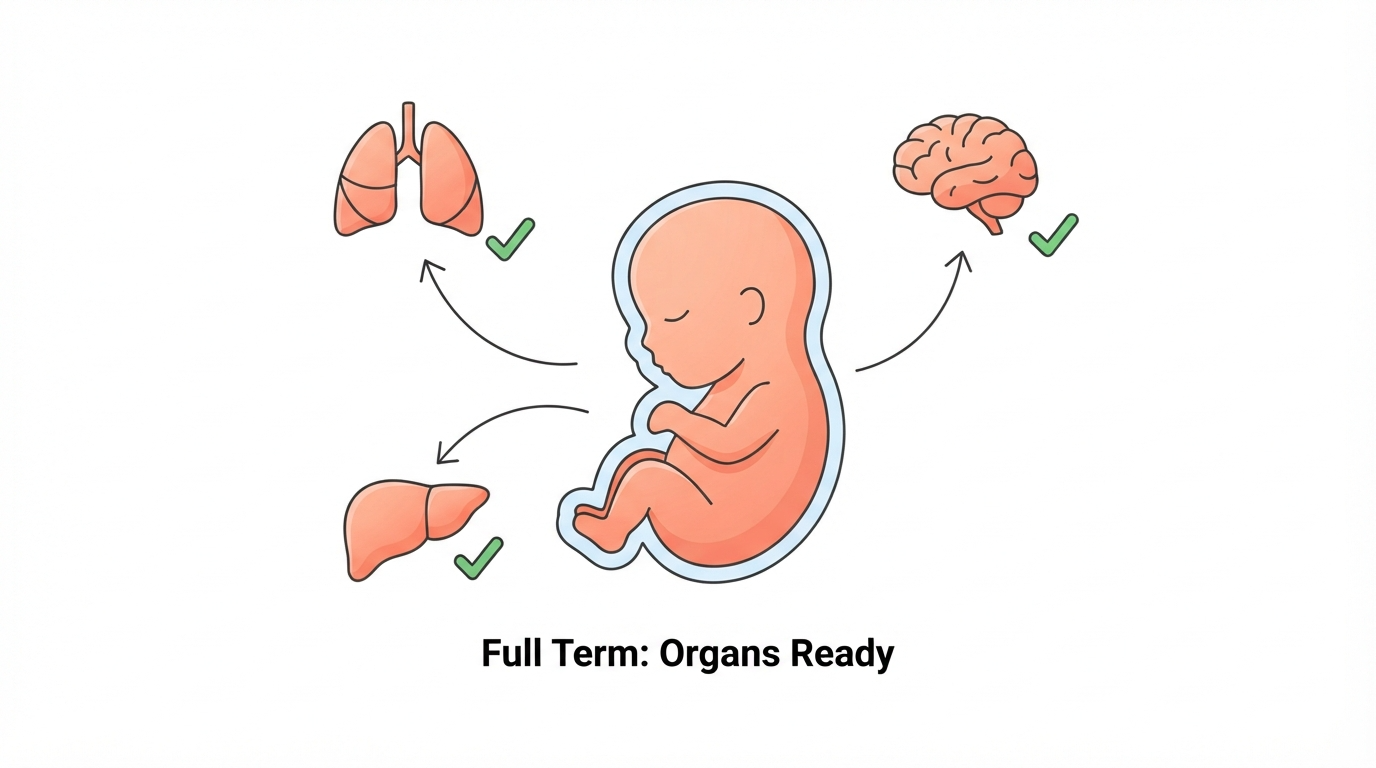
Reaching full term at 39 weeks is a meaningful milestone. The brain, lungs, and liver — the three organs that do some of their most important late-pregnancy work — have now had the benefit of the full 39 weeks research points to for development, rather than being delivered early without a medical reason to do so. (Source: NICHD, NIH)
That doesn't mean development stops the moment your baby is born — plenty of fine-tuning, especially for the brain, continues well into infancy. But reaching full term means your baby has had the benefit of the complete gestational window that's associated with the best outcomes for feeding, temperature regulation, and breathing right after birth.
What You Might Notice at 39 Weeks Pregnant
Week 39 tends to bring a mix of anticipation and the physical demands of these final days. Here's what commonly shows up:
Losing your mucus plug, which can happen days before labor or right as it begins.
Stronger, more frequent Braxton Hicks contractions, which can be tricky to distinguish from early labor.
Increased pelvic pressure, as your baby settles as low as possible.
Trouble sleeping, from a mix of physical discomfort and anticipation.
Nesting energy or restlessness, as the wait feels like it's dragging on.
Swelling in the feet and ankles, especially by the end of the day.
Emotional ups and downs, which are completely normal as you wait for labor to begin.
It's also completely normal to have few or no symptoms yet. Symptom timing and intensity vary widely from person to person and even between pregnancies for the same person.
What's Happening in Your Body
- Your baby is now considered full term.
- Organs are largely ready for life outside the womb.
- Your provider may begin checking cervical dilation and effacement at appointments.
- Only about 1 week remains until your official due date, though 37 to 42 weeks is considered a normal range.
Tips for Week 39
Try to rest and conserve energy, even if restlessness makes that hard.
Ask your provider what to expect if you go past your due date, including any conversation about membrane sweeps or induction timing.
Keep tracking your baby's movements, and report any noticeable decrease right away.
Keep taking your prenatal vitamin — it still matters right up until delivery.
Have your support people and childcare plans confirmed, in case labor starts with little warning.
Tips for Partners
- Stay flexible and ready to go at short notice.
- Help manage the emotional ups and downs of the wait, which are completely normal for both of you.
- Confirm any backup childcare or logistics plans one more time.
- Keep your phone charged and easy to reach at all times.
FAQ
How big is my baby at 39 weeks pregnant? About the size of a mini watermelon — roughly 50.7 centimeters long, measured head to heel, and weighing around 3,288 grams.
What does "full term" mean? ACOG defines full term as 39 weeks, 0 days through 40 weeks, 6 days. Reaching this window means your baby has had the benefit of the full gestational period associated with the best outcomes for organ readiness.
Are my baby's organs completely done developing at 39 weeks? Largely, yes — the brain, lungs, and liver have had the benefit of the complete 39-week window research points to, though some fine-tuning, especially for the brain, continues well into infancy.
Is it normal to still be pregnant at my due date? Yes. Only an estimated 5% of babies arrive on their exact due date, and going into labor anywhere from 37 to 42 weeks is considered normal.
What is a membrane sweep? It's a procedure some providers offer near or at your due date, gently separating the amniotic sac from the cervix to try to encourage labor to start on its own. It's optional and not always recommended or needed.
What symptoms are normal at 39 weeks pregnant? Losing the mucus plug, stronger Braxton Hicks contractions, pelvic pressure, trouble sleeping, nesting energy, swelling, and emotional ups and downs are all common at this stage.
How many weeks do I have left at 39 weeks pregnant? Only about 1 week remains until your official due date, though a range of 37 to 42 weeks is considered a normal time to go into labor.
Pregnancy Checklist at Week 39
- Keep taking a prenatal vitamin daily
- Keep tracking your baby's movements daily
- Confirm support and childcare plans in case labor starts soon
- Ask your provider about plans for going past your due date
- Rest and conserve energy where you can
- Keep your phone charged and hospital bag ready
- Note any regular contractions, heavy bleeding, or reduced movement and call your provider if it occurs
Related guides
- 38 Weeks Pregnant: Symptoms, Baby Size & What to Expect — what happened the week before, as the lungs, brain, and liver kept fine-tuning
- Pregnancy Week by Week: A Complete Guide — see what happens in every week and trimester, from implantation to full term
- How Is Your Due Date Actually Calculated? — the exact formula behind your due date, plus a free calculator
Week 39 brings full term status and organs largely ready for life outside the womb, with your due date just about a week away.
Read related post: 38 Weeks Pregnant: Symptoms, Baby Size & What to Expect
Ready to throw the best reveal?
Create your free Poppit event — invitations, live betting pool, and registry in one link.
Create your event ✨