6 Weeks Pregnant: Symptoms, Baby Size & What to Expect
At 6 weeks pregnant, your baby is sweet-pea sized and the heart begins to beat. Arm buds are just emerging, and hCG is nearing its peak — often the week symptoms feel most intense.
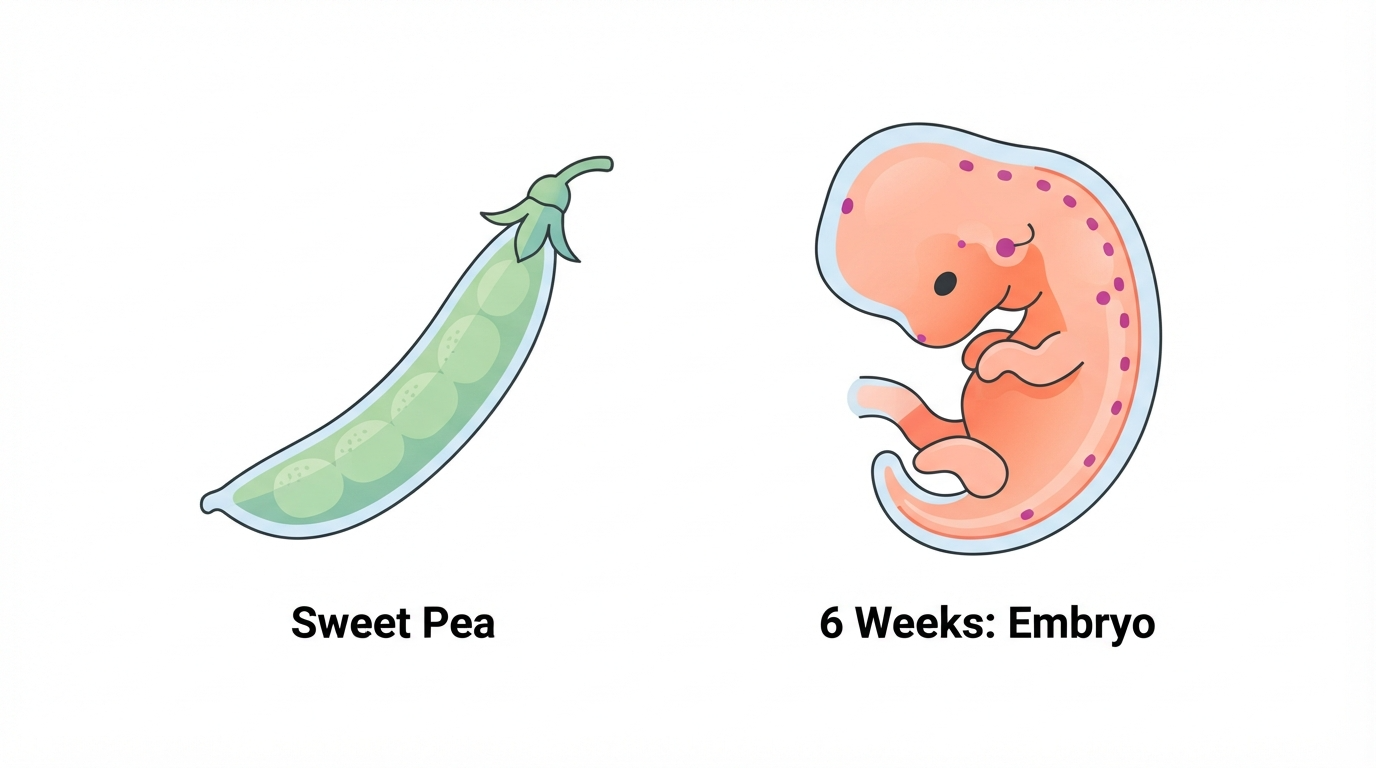
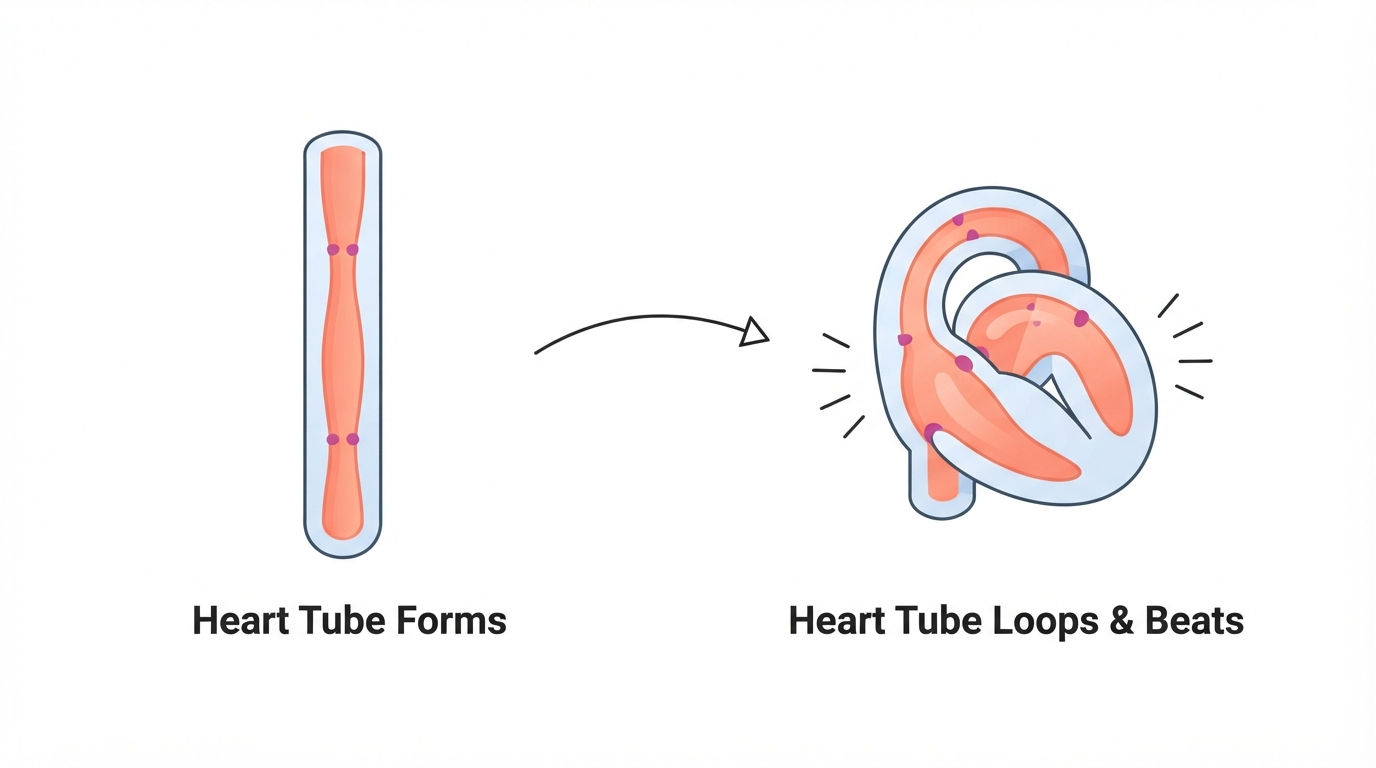
At 6 weeks pregnant, your baby is about the size of a sweet pea, and this is usually the week the pregnancy stops being an abstract idea on a test strip and starts feeling like an actual, developing baby. The primitive heart tube that formed last week folds into a loop and begins to beat, tiny arm buds appear along the sides of the curving embryo, and — for many people — this is also the week symptoms hit their hardest.
If your dates feel confusing, remember that gestational age counts from the first day of your last period (LMP), not from conception — so "6 weeks pregnant" usually means about 4 weeks since ovulation and roughly 3–4 weeks since implantation. For the full timeline, see our pregnancy week-by-week guide. If you're picking up from last week, catch up on 5 weeks pregnant first.
Key takeaways
- Baby is about the size of a sweet pea (roughly 4–6 mm, crown-rump length) and still called an embryo.
- The heart tube from last week loops and starts beating this week, and arm buds begin to appear.
- hCG typically peaks around this stage, which is why many people feel their most intense symptoms around week 6.
What "6 Weeks Pregnant" Actually Means
Using standard gestational dating, week 6 starts about 4 weeks after ovulation — roughly the midpoint between missing your period and reaching the end of the first trimester. In fetal-age terms (counting from conception rather than your last period), this is closer to "4 weeks post-conception," which is one reason the same milestone can appear under a different week number depending on the source.
This is also often the earliest point where a transvaginal ultrasound can pick up a flicker of cardiac activity, which is why many providers schedule a first "viability" ultrasound somewhere around 6 to 8 weeks — the American Pregnancy Association notes a heartbeat is generally detectable by vaginal ultrasound starting around 6½ weeks.
Baby Size at 6 Weeks
At 6 weeks, your baby is an embryo about the size of a sweet pea — roughly 4 to 6 millimeters long, measured crown-to-rump. The embryo has a distinct C-shaped curve, with a disproportionately large head compared to the rest of the body. Small paddle-like arm buds have started to appear along the sides of the trunk this week, with leg buds typically following just a couple of days behind (UNSW Embryology).
The Heart Begins to Beat
This is the headline event of week 6. The primitive heart tube that formed last week — a simple straight tube at that point — folds and loops into a curved shape, and the earliest muscle contractions begin. Many parents describe this as the moment pregnancy started to feel real, even though it's still weeks before an ultrasound shows anything resembling a fully formed heart.
At the same time, the neural tube that closed over the past couple of weeks continues developing into the earliest divisions of the brain — the forebrain, midbrain, and hindbrain are all distinguishable by this stage. Tiny dark spots mark where the eyes will form, and small indentations on either side of the head hint at where the ears will eventually be.
Why this matters for prenatal care. With the heart, brain, and limb buds all under active construction simultaneously, week 6 remains a high-sensitivity window for avoiding alcohol, unapproved medications, and other exposures your provider has flagged. (General guidance — confirm specifics with your provider: ACOG)
What You Might Notice at 6 Weeks Pregnant
hCG levels are typically at or near their steepest climb around this point, which is why symptoms tend to feel especially intense for a lot of people this week. Everyone's experience is different, but here's what commonly shows up:
Nausea and morning sickness. Despite the name, it can strike at any hour. For many people, week 6 is right in the thick of the peak window, which usually runs from about week 6 through week 9.
Fatigue that hits harder than usual. Rising progesterone has a sedating effect, and by week 6 a lot of people describe exhaustion that feels disproportionate to how much they're actually doing.
Breast tenderness and swelling. Continued increases in estrogen and progesterone keep driving blood flow to breast tissue, often making it feel fuller, heavier, or sore.
Frequent urination. Rising blood volume and hCG's effect on pelvic blood flow send many people to the bathroom more often — even though the uterus itself is still too small to be pressing on the bladder yet.
Food aversions and stronger sense of smell. Foods or smells that never bothered you before — coffee, certain proteins, strong perfume — can suddenly feel intolerable this week.
Mild bloating or cramping. As the uterus continues to grow and adjust, some light cramping or bloating is common and typically not a cause for concern unless it's severe or paired with heavy bleeding.
Mood swings. The same hormonal surge driving physical symptoms can make emotions feel closer to the surface — irritability, tearfulness, or sudden shifts in mood are all considered normal at this stage.
It's also completely normal to have few or no symptoms yet. Symptom timing and intensity vary widely from person to person and even between pregnancies for the same person.
What's Happening in Your Body
- hCG is near its peak climb. Levels are still roughly doubling every 48–72 hours, and many people find their symptoms track closely with this hormonal surge.
- The heart starts beating. As covered above, this is the defining developmental event of week 6.
- Arm buds appear. The earliest visible limb structures emerge along the sides of the trunk, with leg buds to follow shortly after.
- Facial features begin taking shape. Dark spots mark where the eyes will form, and small pits indicate where the nose and ears will eventually develop.
- Progesterone stays elevated, still maintained by the corpus luteum, keeping the uterine lining stable until the placenta matures enough to take over hormone production.
Tips for Week 6
Keep taking your prenatal vitamin with folic acid. The brain and nervous system are still under active construction, so daily consistency matters more than ever.
Eat small, frequent meals. An empty stomach tends to make nausea worse for a lot of people; bland, small snacks throughout the day are often easier to tolerate than three big meals.
Stay hydrated, especially with morning sickness. Sipping water, ginger tea, or an electrolyte drink steadily throughout the day is usually easier than trying to drink a lot at once.
Confirm or schedule your first prenatal appointment. If you haven't already, week 6 is a good time to lock in a date — many providers schedule the first visit somewhere between weeks 6 and 10.
Avoid alcohol, tobacco, and unapproved medications. With the heart, brain, and limb buds all developing simultaneously, this remains a high-leverage week to be cautious about exposures.
Rest without guilt. Between nausea and fatigue, needing more downtime than usual this week is expected, not a sign you're falling behind.
Tips for Partners
- Take nausea and food aversions seriously, even when they seem mild from the outside — certain smells in the house can become genuinely hard to tolerate this week.
- Help with logistics — booking the first prenatal appointment or stocking bland, easy-to-eat snacks are small, concrete ways to lighten the load.
- Expect mood swings and don't take them personally — they're hormonal, not a reflection of the relationship.
- Check in before making food or scent-heavy plans, since sensitivities can shift from day to day at this stage.
FAQ
How big is my baby at 6 weeks pregnant? About the size of a sweet pea — roughly 4 to 6 millimeters, measured crown-to-rump. It's still called an embryo at this stage.
Can you hear or see a heartbeat at 6 weeks? Sometimes. The heart tube loops and begins beating this week, and a transvaginal ultrasound may pick up a flicker of cardiac activity around this time, though it isn't always visible for every pregnancy until closer to week 7 or 8.
What is developing in my baby at 6 weeks? The heart loops and starts beating, arm buds appear along the trunk, and the earliest divisions of the brain and facial features (eye spots, ear pits) start taking shape.
What symptoms are normal at 6 weeks pregnant? Nausea, fatigue, breast tenderness, frequent urination, food aversions, mild bloating or cramping, and mood swings are all common. Having few or no symptoms is also normal.
Why do symptoms feel so intense around week 6? hCG is typically near its steepest climb around this point, and many people find that symptom intensity tracks closely with that hormonal surge.
Is cramping normal at 6 weeks pregnant? Mild cramping as the uterus grows is common. Severe cramping, heavy bleeding, or sharp one-sided pain warrants a call to your provider.
When should I schedule my first prenatal appointment? Many providers schedule the first visit somewhere between weeks 6 and 10, so if you haven't called yet, week 6 is a good time to get on the calendar.
Pregnancy Checklist at Week 6
- Schedule your first prenatal appointment if you haven't already
- Keep taking a prenatal vitamin with folic acid daily
- Keep bland, easy-to-eat snacks on hand for nausea
- Stay hydrated throughout the day, not just when you feel thirsty
- Avoid alcohol, tobacco, and check any medications with your provider
- Rest when fatigue or nausea hits — it's expected, not a setback
- Note any severe cramping or heavy bleeding and call your provider if it occurs
Related guides
- 5 Weeks Pregnant: Symptoms, Baby Size & What to Expect — what happened the week before, when the primitive heart tube first formed
- Pregnancy Week by Week: A Complete Guide — see what happens in every week and trimester, from implantation to full term
- How Is Your Due Date Actually Calculated? — the exact formula behind your due date, plus a free calculator
Week 6 is where the pregnancy starts to feel undeniably real — while the heart begins its very first beats and arm buds appear beneath the surface, your body is running at full hormonal intensity to support it.
Read related post: 5 Weeks Pregnant: Symptoms, Baby Size & What to Expect
Ready to throw the best reveal?
Create your free Poppit event — invitations, live betting pool, and registry in one link.
Create your event ✨