9 Weeks Pregnant: Symptoms, Baby Size & What to Expect
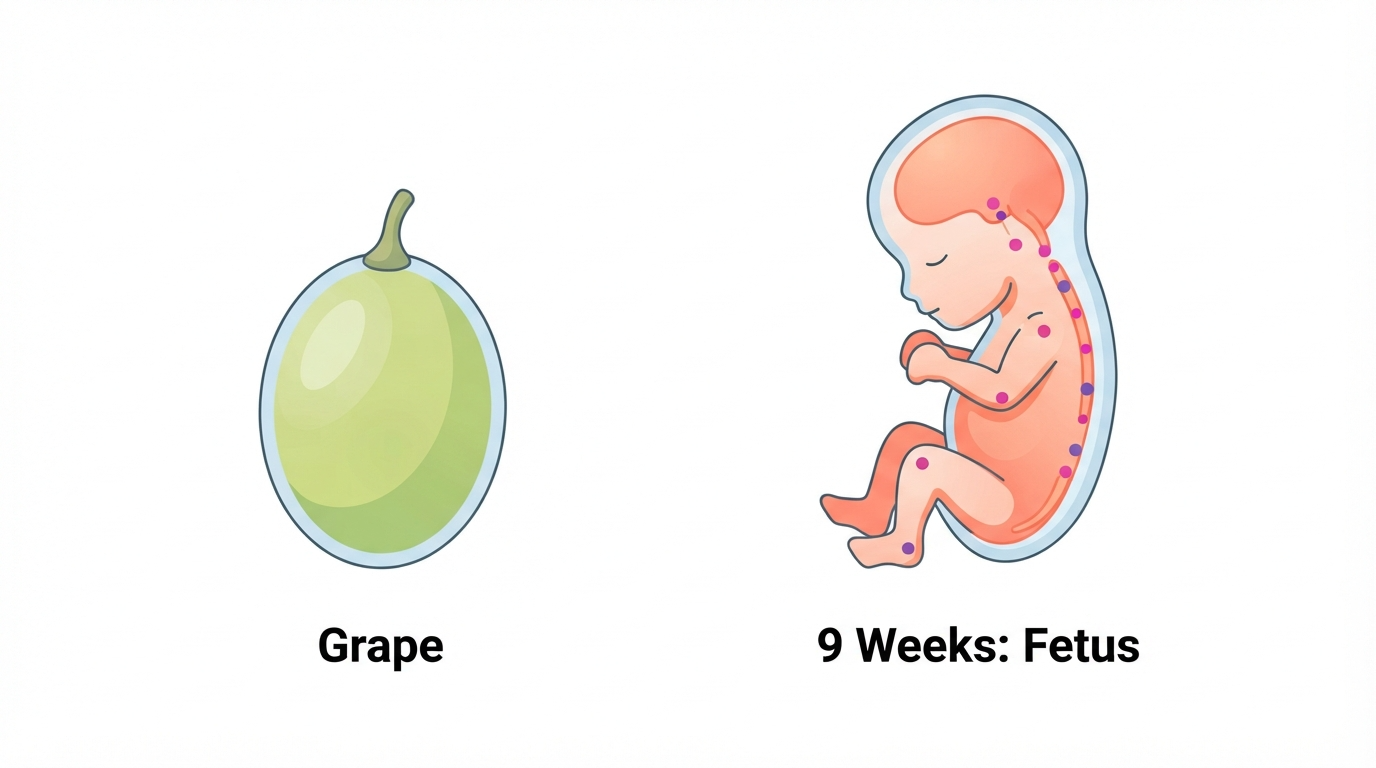
At 9 weeks pregnant, your baby is grape sized and often described as making the shift from embryo to fetus. Elbows and knees can bend for the first time, and easing hCG levels may bring subtle shifts in symptoms.
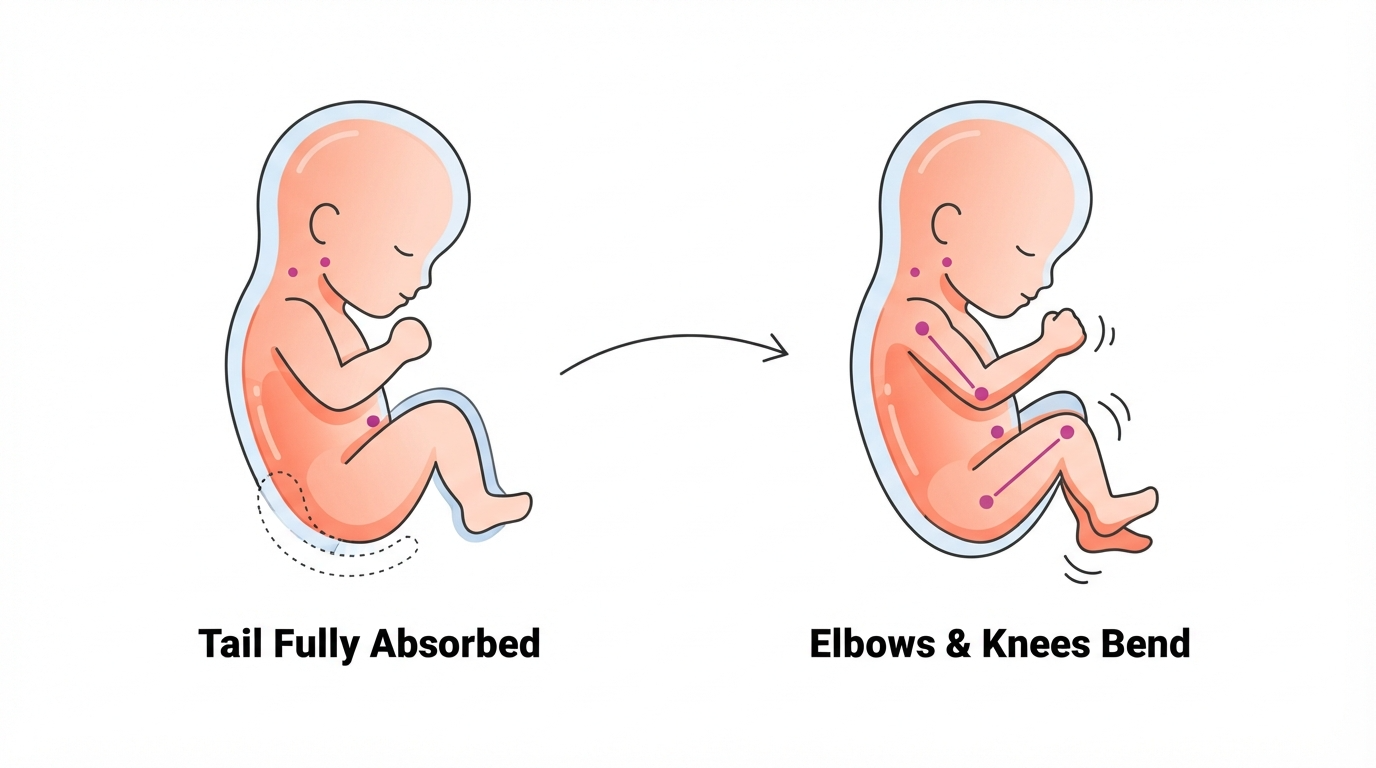
At 9 weeks pregnant, your baby is about the size of a grape, and this week is often described as the point where your baby stops being called an embryo and starts being called a fetus. The embryonic tail is fully gone, tiny elbows and knees allow the limbs to bend, and the overall shape is starting to look a lot more like a very small person.
If your dates feel confusing, remember that gestational age counts from the first day of your last period (LMP), not from conception — so "9 weeks pregnant" usually means about 7 weeks since ovulation. For the full timeline, see our pregnancy week-by-week guide, or find out exactly how your due date is calculated. If you're picking up from last week, catch up on 8 weeks pregnant first.
Key takeaways
- Baby is about the size of a grape (roughly 22–30 mm, crown-rump length), and many sources mark this week as the shift from "embryo" to "fetus."
- The embryonic tail is now fully absorbed, and elbows and knees allow the limbs to bend for the first time.
- hCG often begins leveling off or gradually declining after peaking around this stage, which is why some people notice symptoms starting to shift.
What "9 Weeks Pregnant" Actually Means
Using standard gestational dating, week 9 starts about 7 weeks after ovulation. In fetal-age terms (counting from conception rather than your last period), this is closer to "7 weeks post-conception," which is why the same developmental milestone can appear under a different week number depending on the source or app you're using.
This week is commonly cited as the point where the embryonic period ends and the fetal period begins — the Cleveland Clinic notes that by the ninth week of pregnancy, the embryo officially becomes a fetus, though some sources place the cutoff a week or so later depending on whether they count from LMP or from conception.
Baby Size at 9 Weeks
At 9 weeks, your baby is about the size of a grape — roughly 22 to 30 millimeters long, measured crown-to-rump. The proportions are starting to shift: the trunk continues to lengthen relative to the head, and the overall silhouette looks noticeably less curled than it did just a couple of weeks ago.
The Shift From Embryo to Fetus
Week 9 is often described as a turning point, both in terminology and in appearance. The embryonic tail, which has been shrinking for weeks, is now fully absorbed into the base of the spine, and the body has straightened out considerably compared to the tightly curled shape of earlier weeks. Elbows and knees are now developed enough to let the arms and legs bend, even though movement isn't yet strong enough to be felt.
Facial features continue refining: eyelids are forming and will soon fuse closed for protection, the outer ears are taking on a more defined shape, and the upper lip is coming together. Tiny buds that will become teeth are starting to form beneath the gums, and nipples are becoming visible on the chest. Muscle tissue is developing throughout the body, laying the groundwork for movement in the coming weeks.
Why this matters for prenatal care. With so many structures — teeth buds, facial features, and limb joints — finishing their initial formation this week, continuing to avoid alcohol, unapproved medications, and other flagged exposures remains important. (General guidance — confirm specifics with your provider: ACOG)
What You Might Notice at 9 Weeks Pregnant
hCG often peaks somewhere around this stage and may begin leveling off afterward, though the timing varies quite a bit from person to person. Here's what commonly shows up:
Nausea and morning sickness. Many people are still within the peak window here, though some start noticing very early signs of easing over the coming weeks.
Ongoing fatigue. Elevated progesterone continues to have a sedating effect, and tiredness often remains one of the most noticeable symptoms through week 9.
Breast tenderness and changes. Breasts may continue to feel fuller or more sensitive, and some people notice the areolas starting to darken.
Frequent urination. Rising blood volume and hCG's effect on pelvic blood flow continue to send many people to the bathroom more often.
Bloating and mild constipation. Progesterone's relaxing effect on smooth muscle throughout the digestive tract can continue to slow digestion for some people.
Increased vaginal discharge. A thin, milky discharge called leukorrhea is common as estrogen rises and blood flow to the pelvic area increases; it's normal unless it has an unusual color, odor, or is accompanied by itching.
Mood swings. The same hormonal surge driving physical symptoms can make emotions feel closer to the surface, though for some people this begins settling slightly as hCG stabilizes.
It's also completely normal to have few or no symptoms yet. Symptom timing and intensity vary widely from person to person and even between pregnancies for the same person.
What's Happening in Your Body
- hCG often nears its peak. Levels may begin leveling off or gradually declining after this stage, which is why some symptoms can start shifting in the coming weeks.
- The embryo-to-fetus shift happens. As covered above, many sources mark this week as the transition point.
- Elbows and knees allow bending. Limb joints are developed enough to let the arms and legs flex.
- Tooth buds and nipples appear. Small structures under the gums and on the chest mark ongoing tissue differentiation.
- The uterus continues expanding, though it's typically still tucked behind the pelvic bone and not yet visible externally.
Tips for Week 9
Keep taking your prenatal vitamin with folic acid. Facial features, teeth buds, and limb joints are all still refining, so daily consistency matters.
Eat small, frequent meals. An empty stomach tends to make nausea worse for a lot of people; bland, small snacks throughout the day are often easier to tolerate than three big meals.
Stay hydrated, especially with morning sickness. Sipping water, ginger tea, or an electrolyte drink steadily throughout the day is usually easier than trying to drink a lot at once.
Track your symptoms if they're starting to shift. Some people notice early signs of nausea easing around this point — jotting down changes can help you and your provider spot patterns.
Avoid alcohol, tobacco, and unapproved medications. Fine structural details are still forming, so this remains a period to stay cautious about exposures.
Rest without guilt. Between nausea and fatigue, needing more downtime than usual is expected, not a sign you're falling behind.
Tips for Partners
- Take nausea and food aversions seriously, even if they seem to be easing slightly — everyone's timeline for symptom changes is different.
- Help with logistics — prepping easy snacks or handling errands are small, concrete ways to lighten the load.
- Expect mood swings and don't take them personally — they're hormonal, not a reflection of the relationship.
- Ask how they're feeling day to day, since symptom intensity can start shifting noticeably around this stage for some people.
FAQ
How big is my baby at 9 weeks pregnant? About the size of a grape — roughly 22 to 30 millimeters, measured crown-to-rump.
Is my baby an embryo or a fetus at 9 weeks? The Cleveland Clinic marks week 9 as the point where the term shifts from "embryo" to "fetus," though some sources place the exact clinical cutoff a week or so later.
What is developing in my baby at 9 weeks? The embryonic tail fully disappears, elbows and knees allow the limbs to bend, tooth buds and nipples become visible, and facial features continue refining.
What symptoms are normal at 9 weeks pregnant? Nausea, fatigue, breast tenderness, frequent urination, bloating, increased discharge, and mood swings are all common. Having few or no symptoms is also normal.
Is discharge normal at 9 weeks pregnant? A thin, milky discharge (leukorrhea) is common and normal. Discharge with an unusual color, odor, or accompanied by itching should be checked by your provider.
Will my nausea start improving soon? For many people, morning sickness begins easing sometime between weeks 9 and 13, though the timeline varies widely and some people experience symptoms longer.
When should I schedule my first prenatal appointment? Many providers schedule the first visit somewhere between weeks 6 and 10, so if you haven't already, this is a good time to confirm the date.
Pregnancy Checklist at Week 9
- Confirm your first prenatal appointment if it isn't scheduled yet
- Keep taking a prenatal vitamin with folic acid daily
- Keep bland, easy-to-eat snacks on hand for nausea
- Stay hydrated throughout the day, not just when you feel thirsty
- Avoid alcohol, tobacco, and check any medications with your provider
- Rest when fatigue or nausea hits — it's expected, not a setback
- Note any unusual discharge, severe cramping, or heavy bleeding and call your provider if it occurs
Related guides
- 8 Weeks Pregnant: Symptoms, Baby Size & What to Expect — what happened the week before, as fingers and toes began forming
- Pregnancy Week by Week: A Complete Guide — see what happens in every week and trimester, from implantation to full term
- How Is Your Due Date Actually Calculated? — the exact formula behind your due date, plus a free calculator
Week 9 marks a milestone moment — your baby is often described as officially a fetus now, with bending elbows and knees and a shape that's looking more distinctly human every week.
Read related post: 8 Weeks Pregnant: Symptoms, Baby Size & What to Expect
Ready to throw the best reveal?
Create your free Poppit event — invitations, live betting pool, and registry in one link.
Create your event ✨