10 Weeks Pregnant: Symptoms, Baby Size & What to Expect
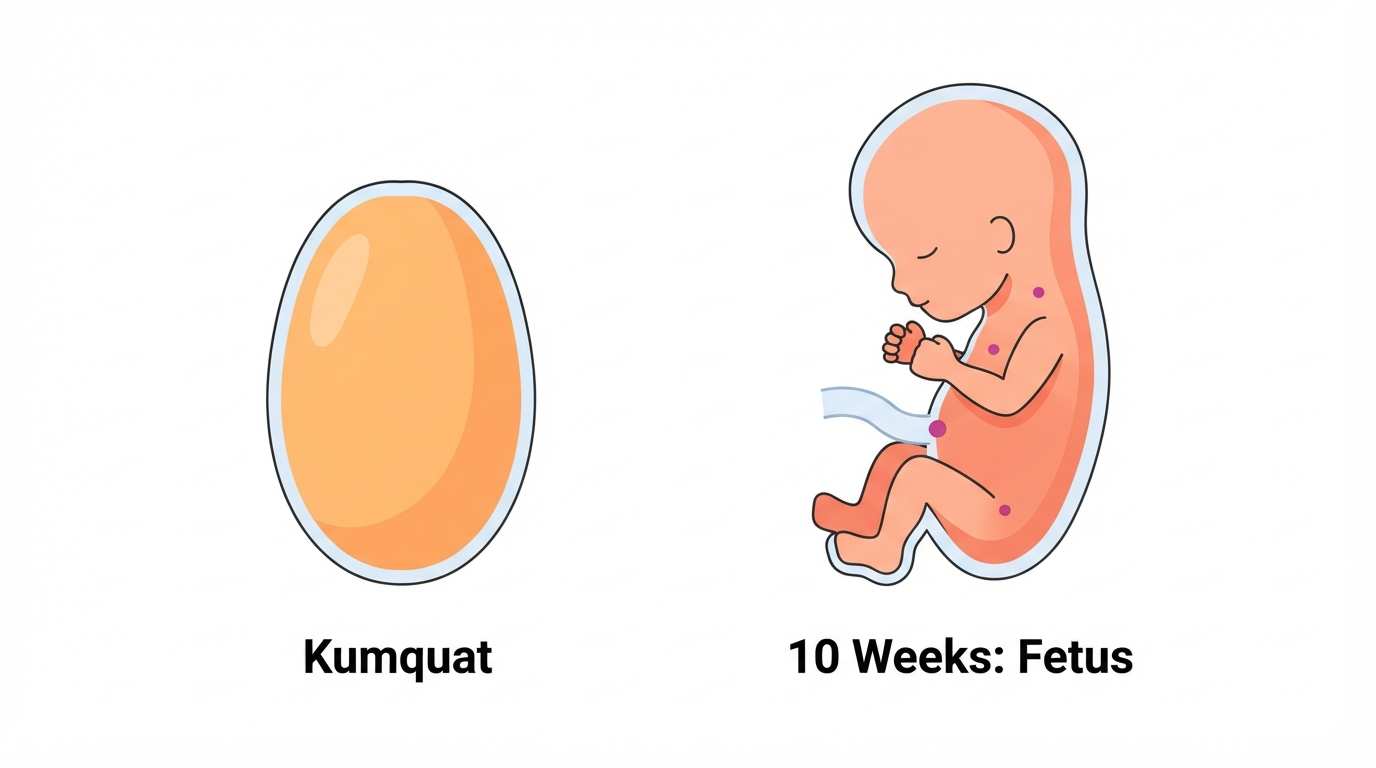
At 10 weeks pregnant, your baby is kumquat sized and vital organs are beginning to function. Tiny fingernails are starting to form, along with the first outlines of tooth buds beneath the gums.
At 10 weeks pregnant, your baby is about the size of a kumquat, and several vital organs are starting to take on early function rather than just forming structurally. Tiny fingernails and toenails are beginning to develop, the limbs can bend at the elbows and knees, and the risk of miscarriage drops meaningfully once a heartbeat has been confirmed around this stage.
If your dates feel confusing, remember that gestational age counts from the first day of your last period (LMP), not from conception — so "10 weeks pregnant" usually means about 8 weeks since ovulation. For the full timeline, see our pregnancy week-by-week guide, or find out exactly how your due date is calculated. If you're picking up from last week, catch up on 9 weeks pregnant first.
Key takeaways
- Baby is about the size of a kumquat (roughly 31–38 mm, crown-rump length).
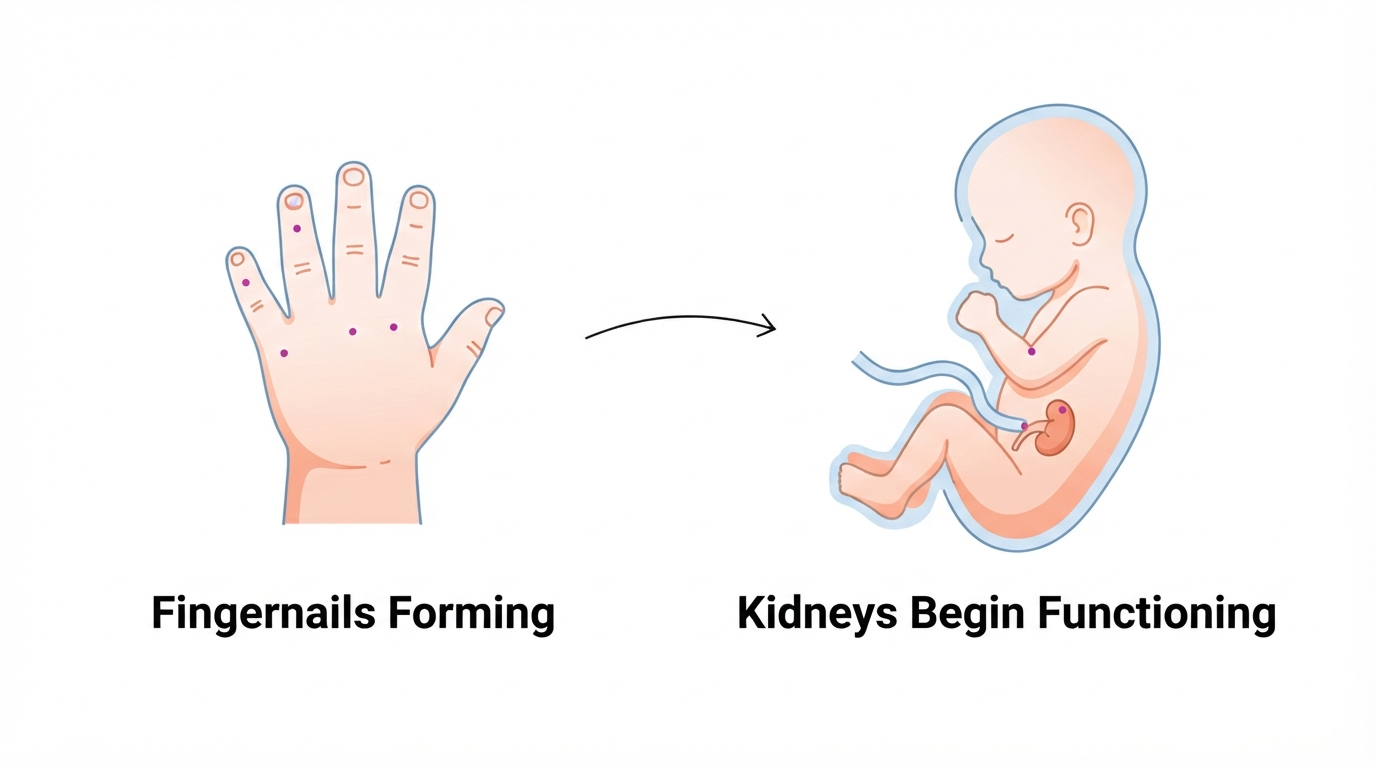
- Vital organs — including the kidneys, liver, and intestines — are beginning to take on early function, not just structural formation.
- Tiny fingernails and toenails are starting to form, and the outline of tooth buds continues developing beneath the gums.
What "10 Weeks Pregnant" Actually Means
Using standard gestational dating, week 10 starts about 8 weeks after ovulation, and marks the very end of the embryonic period by most clinical conventions. In fetal-age terms (counting from conception rather than your last period), this is closer to "8 weeks post-conception," which is why the same developmental milestone can appear under a different week number depending on the source.
This week is also commonly cited as a point where confirmed cardiac activity meaningfully lowers the statistical risk of miscarriage going forward. A cohort study of asymptomatic pregnancies with confirmed cardiac activity found the miscarriage risk fell to about 0.7% by 10 weeks of gestation, down from 9.4% at 6 weeks (Tong et al., 2008), though individual risk factors can affect these figures.
Baby Size at 10 Weeks
At 10 weeks, your baby is about the size of a kumquat — roughly 31 to 38 millimeters long, measured crown-to-rump, and weighing only a few grams. The body continues to straighten and lengthen, and the head, while still large, is becoming more proportional to the rest of the body with each passing week.
Vital Organs Beginning to Function
Week 10 is a milestone week for organ function, not just organ formation. The kidneys have taken shape and are starting to produce small amounts of urine. The intestines, which have been developing outside the abdominal cavity in a small bulge near the umbilical cord, continue that process before eventually rotating into their permanent position inside the abdomen. The liver is beginning to take on some of its metabolic responsibilities, and early muscle contractions are becoming more coordinated, even though they're still far too subtle to feel.
Externally, small but noticeable changes are underway: tiny fingernails and toenails are starting to form, tooth buds continue developing beneath the gums, and downy, translucent skin covers the whole body. The external ears are shifting toward their final position on the sides of the head.
Why this matters for prenatal care. With multiple organ systems shifting from formation to early function this week, continuing to avoid alcohol, unapproved medications, and other flagged exposures remains important. (General guidance — confirm specifics with your provider: ACOG)
What You Might Notice at 10 Weeks Pregnant
hCG has often peaked by this point and may start a gradual decline for some people, though nausea and other symptoms can lag behind that shift. Here's what commonly shows up:
Nausea and morning sickness. Some people begin noticing early signs of easing around this stage, though for many it continues at full intensity through the rest of the first trimester.
Ongoing fatigue. Tiredness often remains noticeable, though a portion of people start to feel a slight uptick in energy as they move toward the second trimester.
Breast tenderness and changes. Breasts may continue to feel full or sensitive, and the areolas may keep darkening.
Frequent urination. Rising blood volume and hCG's effect on pelvic blood flow continue to send many people to the bathroom more often.
Visible veins and skin changes. As blood volume increases, some people notice more visible veins, particularly on the chest, abdomen, or legs.
Round ligament twinges. As the uterus continues expanding, some people start to notice occasional light pulling or twinging sensations low in the abdomen.
Mood swings. Hormonal fluctuations can continue to make emotions feel closer to the surface, though intensity often varies week to week.
It's also completely normal to have few or no symptoms yet. Symptom timing and intensity vary widely from person to person and even between pregnancies for the same person.
What's Happening in Your Body
- hCG often begins a gradual decline. Many people passed their hCG peak around week 9 or 10, though symptom changes can lag behind the hormonal shift.
- Vital organs begin functioning. As covered above, the kidneys, liver, and intestines are all shifting toward early function.
- Fingernails and toenails start forming. Small but visible external changes continue alongside internal organ development.
- The uterus keeps expanding, occasionally causing light round ligament twinges as it grows.
- Progesterone remains elevated, supported increasingly by the placenta as it takes over more hormone production.
Tips for Week 10
Keep taking your prenatal vitamin with folic acid. Organ systems are shifting into early function, so consistency continues to matter.
Eat small, frequent meals. An empty stomach tends to make nausea worse for a lot of people; bland, small snacks throughout the day are often easier to tolerate than three big meals.
Stay hydrated, especially with morning sickness. Sipping water, ginger tea, or an electrolyte drink steadily throughout the day is usually easier than trying to drink a lot at once.
Mention any round ligament twinges at your next appointment. Mild, brief twinges are common, but your provider can help you distinguish normal stretching from something that needs attention.
Avoid alcohol, tobacco, and unapproved medications. Organ systems are still fine-tuning function, so this remains a period to stay cautious about exposures.
Rest without guilt. Between nausea and fatigue, needing more downtime than usual is expected, not a sign you're falling behind.
Tips for Partners
- Take nausea and fatigue seriously, even if they seem to be shifting — everyone's timeline for symptom changes is different.
- Help with logistics — prepping easy snacks or handling errands are small, concrete ways to lighten the load.
- Expect mood swings and don't take them personally — they're hormonal, not a reflection of the relationship.
- Ask how they're feeling day to day, since energy and symptom levels can start shifting noticeably around this stage for some people.
FAQ
How big is my baby at 10 weeks pregnant? About the size of a kumquat — roughly 31 to 38 millimeters, measured crown-to-rump.
What is developing in my baby at 10 weeks? Vital organs like the kidneys, liver, and intestines are beginning to function, fingernails and toenails start forming, and tooth buds continue developing beneath the gums.
Does confirming a heartbeat at 10 weeks lower miscarriage risk? Yes. A cohort study found the miscarriage risk for pregnancies with confirmed cardiac activity fell to about 0.7% by 10 weeks, down from 9.4% at 6 weeks (Tong et al., 2008), though your provider can speak to your specific situation.
What symptoms are normal at 10 weeks pregnant? Nausea, fatigue, breast tenderness, frequent urination, visible veins, round ligament twinges, and mood swings are all common. Having few or no symptoms is also normal.
Is round ligament pain normal this early? Mild, brief twinges as the uterus stretches are common. Sharp, persistent, or severe pain should be discussed with your provider.
Will my energy start improving soon? Some people notice a gradual lift in energy as they approach the second trimester, though the timeline varies widely from person to person.
When should I schedule my first prenatal appointment? Many providers schedule the first visit somewhere between weeks 6 and 10, so if you haven't already, this is a good time to confirm the date.
Pregnancy Checklist at Week 10
- Confirm your first prenatal appointment if it isn't scheduled yet
- Keep taking a prenatal vitamin with folic acid daily
- Keep bland, easy-to-eat snacks on hand for nausea
- Stay hydrated throughout the day, not just when you feel thirsty
- Avoid alcohol, tobacco, and check any medications with your provider
- Mention any round ligament twinges at your next appointment
- Note any severe cramping or heavy bleeding and call your provider if it occurs
Related guides
- 9 Weeks Pregnant: Symptoms, Baby Size & What to Expect — what happened the week before, when your baby officially became a fetus
- Pregnancy Week by Week: A Complete Guide — see what happens in every week and trimester, from implantation to full term
- How Is Your Due Date Actually Calculated? — the exact formula behind your due date, plus a free calculator
Week 10 marks the shift from pure structural formation to early organ function — while the kidneys, liver, and intestines start their first real work, tiny fingernails are already beginning to form.
Read related post: 9 Weeks Pregnant: Symptoms, Baby Size & What to Expect
Ready to throw the best reveal?
Create your free Poppit event — invitations, live betting pool, and registry in one link.
Create your event ✨