11 Weeks Pregnant: Symptoms, Baby Size & What to Expect
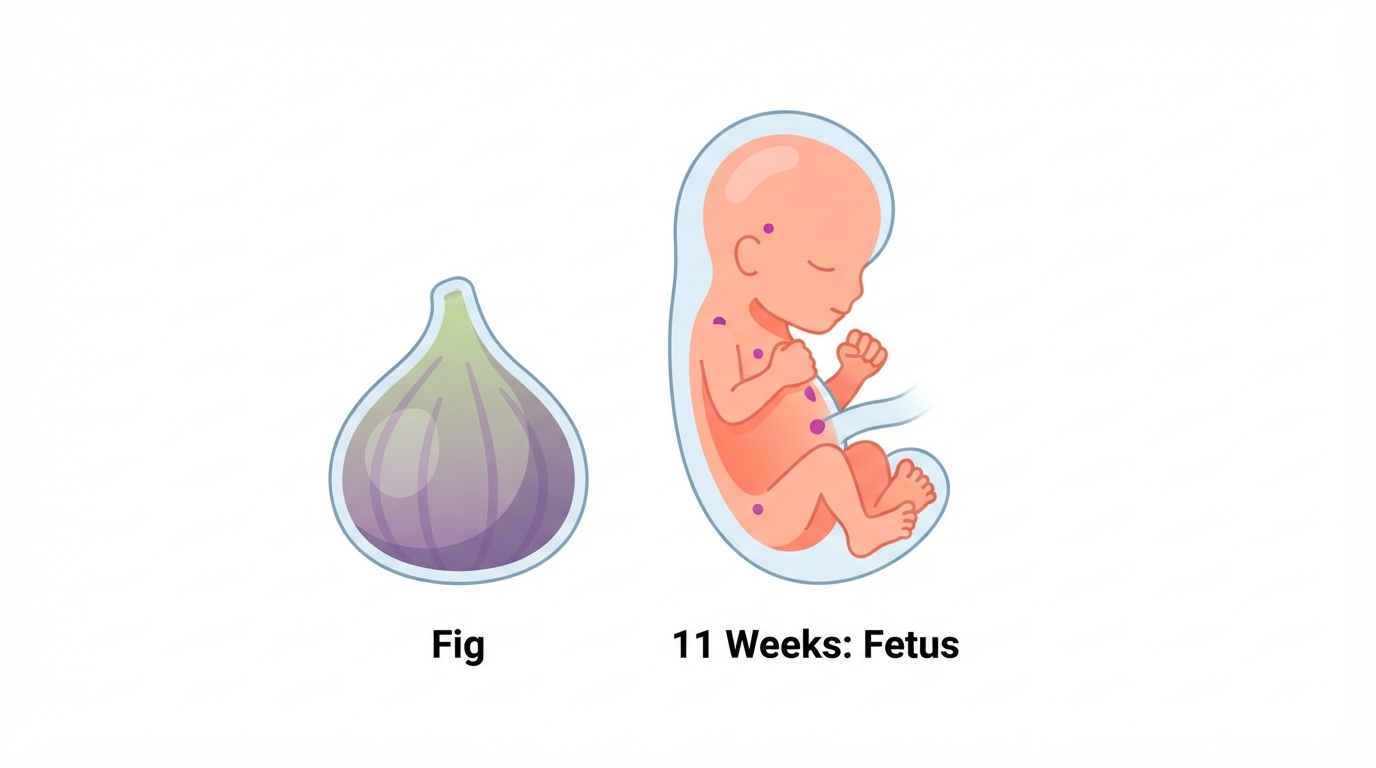
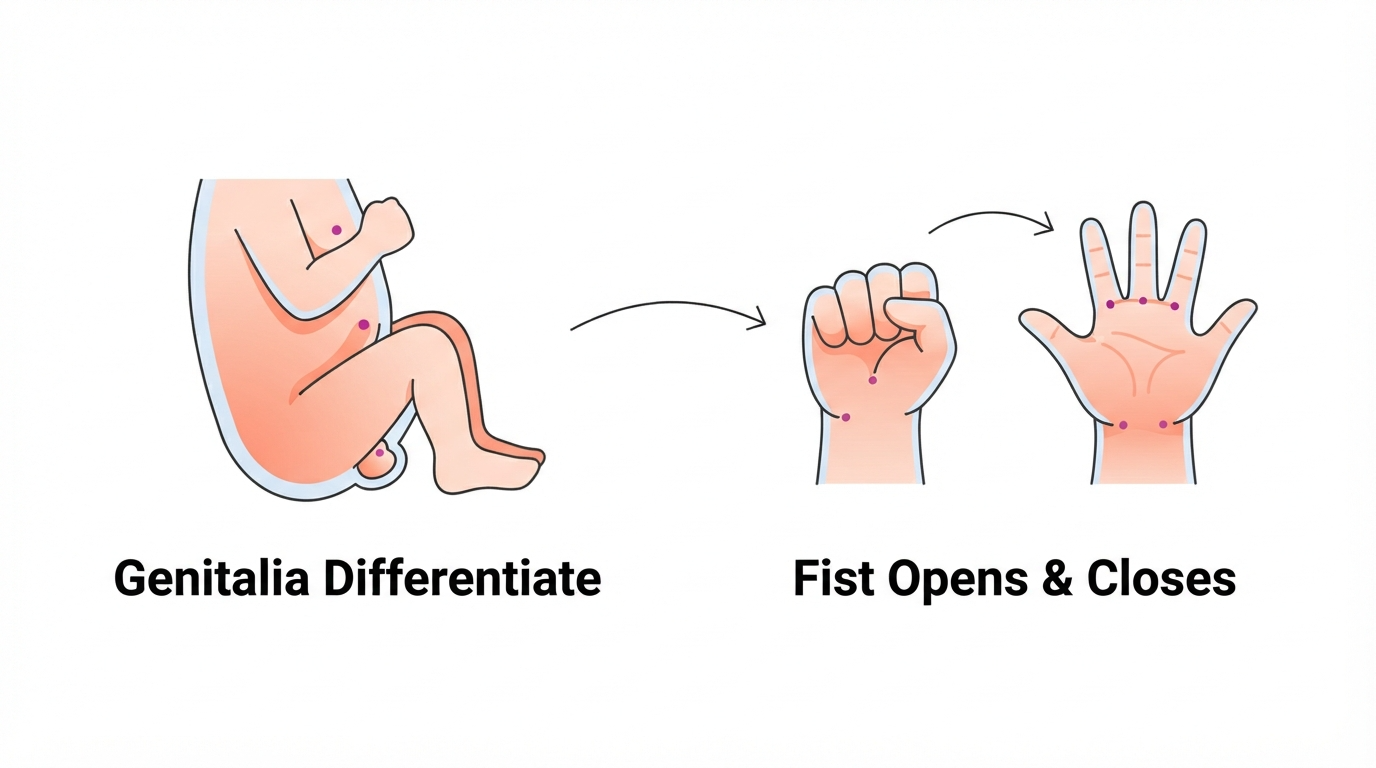
At 11 weeks pregnant, your baby is fig sized and external genitalia are starting to differentiate. Tiny fists can now open and close, and the faint outline of ribs is starting to show through the skin.
At 11 weeks pregnant, your baby is about the size of a fig, and this is the week external genitalia begin to differentiate — though it's still far too early to tell on an ultrasound which direction they're headed. The head makes up nearly half of the total body length, tiny fists can open and close, and the outline of ribs is starting to become visible through translucent skin.
If your dates feel confusing, remember that gestational age counts from the first day of your last period (LMP), not from conception — so "11 weeks pregnant" usually means about 9 weeks since ovulation. For the full timeline, see our pregnancy week-by-week guide, or find out exactly how your due date is calculated. If you're picking up from last week, catch up on 10 weeks pregnant first.
Key takeaways
- Baby is about the size of a fig (roughly 41–44 mm, crown-rump length).
- External genitalia are starting to differentiate this week, though it's still too early to determine sex on an ultrasound.
- Tiny fists can now open and close, and the outline of ribs is starting to become faintly visible through the skin.
What "11 Weeks Pregnant" Actually Means
Using standard gestational dating, week 11 starts about 9 weeks after ovulation, and marks the early stretch of the fetal period by most clinical conventions. In fetal-age terms (counting from conception rather than your last period), this is closer to "9 weeks post-conception," which is why the same developmental milestone can appear under a different week number depending on the source.
This is also generally within the window for nuchal translucency screening, a first-trimester ultrasound measurement some providers use as part of screening for chromosomal conditions. Guidance from the American College of Radiology and ISUOG places the screening window at 11 to 14 weeks of gestation, with 12 to 13 weeks often considered the ideal time for the measurement.
Baby Size at 11 Weeks
At 11 weeks, your baby is about the size of a fig — roughly 41 to 44 millimeters long, measured crown-to-rump, and weighing around 7 to 8 grams. The head still makes up close to half the total body length, though the proportions will keep shifting toward a more typical ratio over the coming weeks as the body grows faster than the head.
External Genitalia Starting to Differentiate
Week 11 is the point where external genitalia begin to differentiate into male or female structures, though the process is still in its earliest stages and the anatomy isn't yet distinct enough to determine on an ultrasound — that typically isn't reliable until somewhere in the second trimester.
Elsewhere, development continues quickly. Tiny fists can now open and close, and toes can be seen clearly separated on each foot. The outline of ribs is starting to become faintly visible through the still-translucent skin. Fine, downy hair called lanugo may begin appearing on the skin in the coming weeks to help regulate temperature. Inside, intestines that had been developing in a small bulge near the umbilical cord are beginning to migrate into their permanent position within the abdominal cavity.
Why this matters for prenatal care. With genital differentiation and continued fine-detail development underway, continuing to avoid alcohol, unapproved medications, and other flagged exposures remains important. (General guidance — confirm specifics with your provider: ACOG)
What You Might Notice at 11 Weeks Pregnant
For many people, the first trimester's most intense symptoms start easing gradually around this stretch, though the timeline varies widely. Here's what commonly shows up:
Nausea that may be starting to ease. Some people notice morning sickness beginning to lift around this stage, though for others it continues at full intensity through the rest of the first trimester.
Fatigue that may be leveling off slightly. Tiredness often remains present, though some people notice a gradual uptick in energy as they approach the second trimester.
Breast tenderness and changes. Breasts may continue to feel full or sensitive as they continue preparing for eventual milk production.
Frequent urination. Rising blood volume and hCG's effect on pelvic blood flow continue to send many people to the bathroom more often.
Round ligament twinges. As the uterus continues expanding, occasional light pulling or twinging sensations low in the abdomen are common.
Visible veins and skin changes. Increasing blood volume can make veins more visible, particularly on the chest, abdomen, or legs.
Mood swings. Hormonal fluctuations can continue to make emotions feel closer to the surface, though many people notice these starting to feel slightly more manageable around this stage.
It's also completely normal to have few or no symptoms yet. Symptom timing and intensity vary widely from person to person and even between pregnancies for the same person.
What's Happening in Your Body
- Nausea may begin easing for some. Many people notice symptoms starting to shift somewhere in this range, though timing varies widely.
- External genitalia begin differentiating. As covered above, though it's too early to determine sex on ultrasound.
- Fists open and close. New muscle coordination allows the first hand movements.
- Rib outlines become faintly visible through the still-translucent skin.
- The uterus continues expanding, occasionally rising just above the pelvic bone by the end of this week for some people.
Tips for Week 11
Keep taking your prenatal vitamin with folic acid. Fine structural details continue refining, so consistency still matters.
Continue eating small, frequent meals. Even if nausea is starting to ease for you, bland, small snacks can help ease the transition back to regular meals.
Stay hydrated. Sipping water, ginger tea, or an electrolyte drink steadily throughout the day remains a helpful habit even as symptoms shift.
Ask about nuchal translucency screening at your next appointment, if you're interested in first-trimester screening options.
Avoid alcohol, tobacco, and unapproved medications. Genital and fine structural development are still underway, so this remains a period to stay cautious about exposures.
Notice — and welcome — any extra energy. If fatigue is starting to lift, it's a good sign you're approaching the more energetic stretch many people experience in the second trimester.
Tips for Partners
- Keep supporting nausea and fatigue management, even as symptoms may start shifting — everyone's timeline is different.
- Ask about screening options together, like nuchal translucency testing, so you're both informed before the appointment.
- Expect mood swings and don't take them personally — they're hormonal, not a reflection of the relationship.
- Celebrate small signs of relief, like reduced nausea, without assuming symptoms are gone for good.
FAQ
How big is my baby at 11 weeks pregnant? About the size of a fig — roughly 41 to 44 millimeters, measured crown-to-rump.
Can you tell the sex of the baby at 11 weeks? Not reliably. External genitalia begin differentiating this week, but the anatomy typically isn't distinct enough to determine on an ultrasound until later in the second trimester.
What is developing in my baby at 11 weeks? External genitalia begin differentiating, fists can open and close, rib outlines become faintly visible, and intestines continue migrating into the abdominal cavity.
What symptoms are normal at 11 weeks pregnant? Nausea, fatigue, breast tenderness, frequent urination, round ligament twinges, and mood swings are all common, though some people notice these starting to ease.
When does morning sickness usually improve? For many people, nausea begins easing somewhere between weeks 9 and 13, though the timeline varies widely and some people experience symptoms longer.
What is nuchal translucency screening? It's a first-trimester ultrasound measurement, typically done between 11 and 14 weeks, that some providers use as part of screening for chromosomal conditions; ask your provider whether it's offered and appropriate for you.
When should I schedule my first prenatal appointment? Many providers schedule the first visit somewhere between weeks 6 and 10, so if you haven't already, this is a good time to confirm the date.
Pregnancy Checklist at Week 11
- Ask your provider about nuchal translucency screening, if interested
- Keep taking a prenatal vitamin with folic acid daily
- Keep bland, easy-to-eat snacks on hand in case nausea persists
- Stay hydrated throughout the day, not just when you feel thirsty
- Avoid alcohol, tobacco, and check any medications with your provider
- Notice any shifts in energy or nausea and mention them at your next appointment
- Note any severe cramping or heavy bleeding and call your provider if it occurs
Related guides
- 10 Weeks Pregnant: Symptoms, Baby Size & What to Expect — what happened the week before, as vital organs began functioning
- Pregnancy Week by Week: A Complete Guide — see what happens in every week and trimester, from implantation to full term
- How Is Your Due Date Actually Calculated? — the exact formula behind your due date, plus a free calculator
Week 11 brings one of the more curious milestones of the first trimester — external genitalia start differentiating even though it's far too early to know which direction they're headed, while tiny fists open and close for the very first time.
Read related post: 10 Weeks Pregnant: Symptoms, Baby Size & What to Expect
Ready to throw the best reveal?
Create your free Poppit event — invitations, live betting pool, and registry in one link.
Create your event ✨