29 Weeks Pregnant: Symptoms, Baby Size & What to Expect
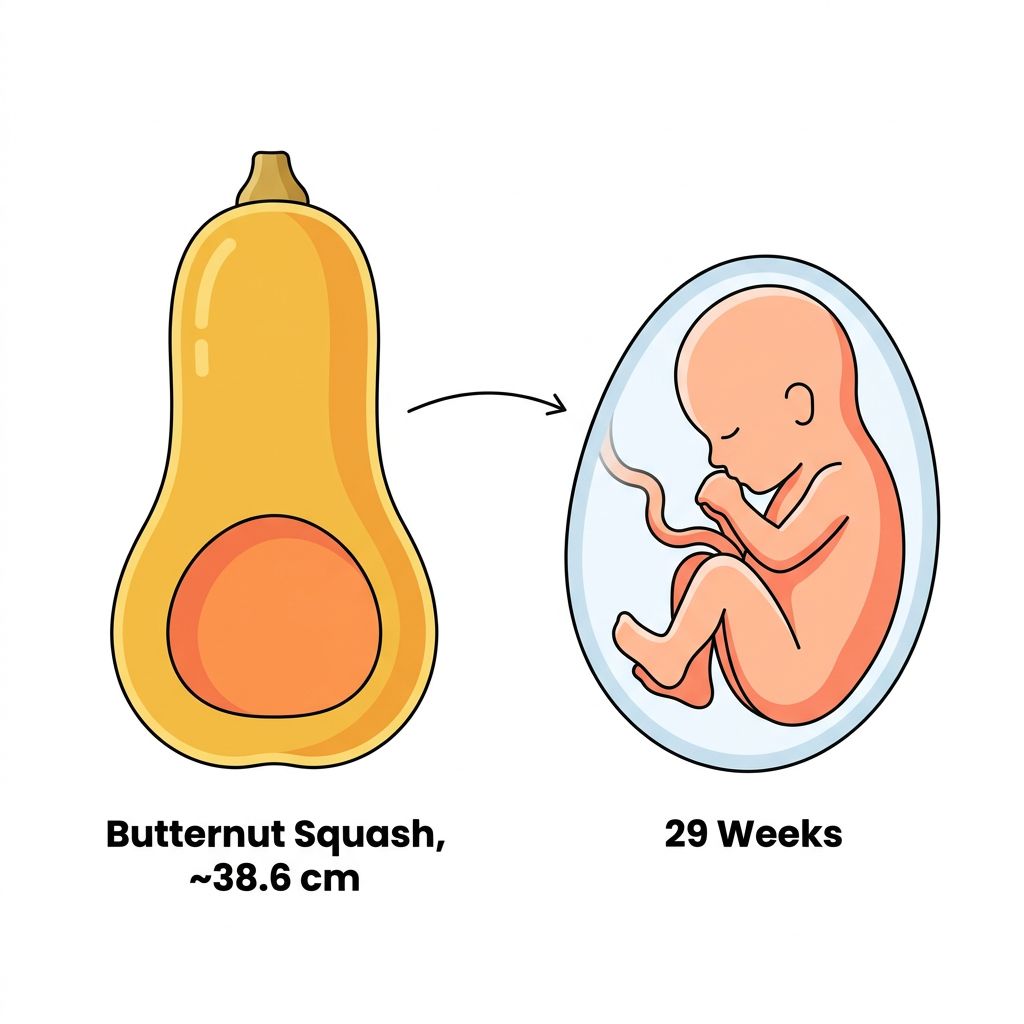
At 29 weeks pregnant, your baby is butternut squash sized and kicks are starting to feel like pokes in a cramped space. Bones are now fully formed but still soft and pliable, continuing to harden over the coming weeks.
At 29 weeks pregnant, your baby is about the size of a butternut squash, and starting to run out of room. As the amniotic sac gets more crowded, kicks and jabs often start feeling less like broad rolls and more like sharp, distinct pokes.
If your dates feel confusing, remember that gestational age counts from the first day of your last period (LMP), not from conception — so "29 weeks pregnant" usually means about 27 weeks since ovulation. For the full timeline, see our pregnancy week-by-week guide, or find out exactly how your due date is calculated. If you're picking up from last week, catch up on 28 weeks pregnant first.
Key takeaways
- Baby is about the size of a butternut squash (roughly 38.6 cm, head to heel) and weighs around 1,153 grams.
- Space is getting tighter in the amniotic sac, so kicks and jabs may feel like sharper, more distinct pokes.
- Bones are fully formed but still soft and pliable, continuing to harden over the coming weeks.
What "29 Weeks Pregnant" Actually Means
Using standard gestational dating, week 29 starts about 27 weeks after ovulation, placing you firmly in the third trimester. In fetal-age terms (counting from conception rather than your last period), this is closer to "27 weeks post-conception."
This stretch of weeks is generally when growth accelerates quickly, which is part of why your baby starts feeling more cramped — there's simply less free space to move around in relative to how much bigger your baby is getting.
Baby Size at 29 Weeks
At 29 weeks, your baby is about the size of a butternut squash — roughly 38.6 centimeters long, measured head to heel, and weighing around 1,153 grams. (Source: Baby Your Baby, Utah Department of Health)
A Cramped Space and Continued Bone Growth
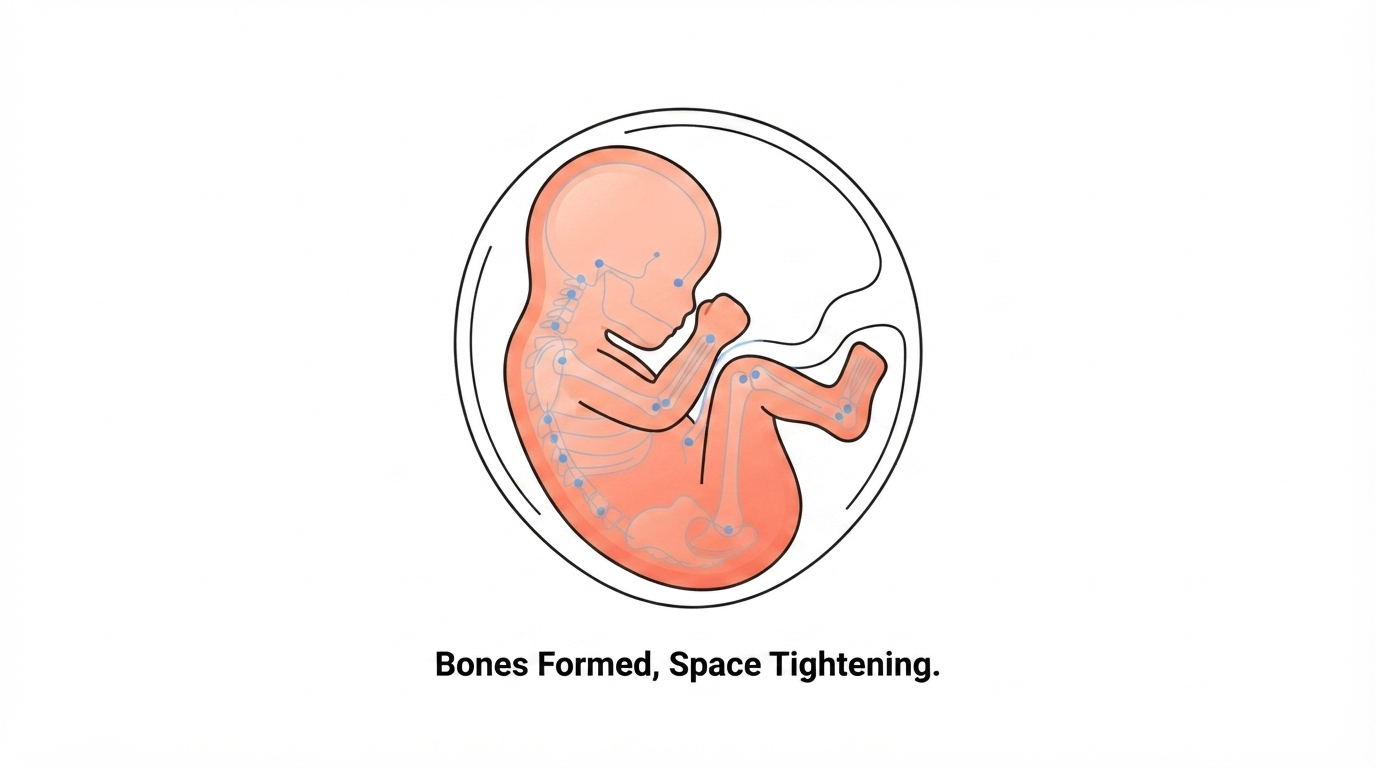
This week, you may notice kicks and jabs feel more like pokes now that your baby is getting cramped in the amniotic sac. (Source: Cleveland Clinic) This is a normal, expected part of the third trimester — as your baby grows larger relative to the amount of amniotic fluid around them, movements naturally become more localized and easier to pinpoint, rather than the broad rolls and stretches you may have felt earlier.
Bones throughout the body are now fully formed, though they remain soft and pliable — a helpful trait for passing through the birth canal later, and one that continues to gradually harden well after birth (the skull, in particular, stays flexible the longest). Muscles and lungs also continue maturing this week, building toward the strength and function your baby will need after delivery.
What You Might Notice at 29 Weeks Pregnant
Week 29 tends to bring a mix of stronger, sharper movement and familiar third-trimester symptoms. Here's what commonly shows up:
Sharper, more distinct kicks, as your baby has less room to move broadly.
Increased fatigue, as your body works harder to support a rapidly growing baby.
Shortness of breath, as the uterus continues pressing up against the diaphragm.
Hemorrhoids and constipation, which can become more noticeable as pressure increases in the pelvic area.
Swelling in the feet and ankles, especially by the end of the day.
Backaches, as your center of gravity continues shifting forward.
Increased iron needs, since your body is producing more blood to support the pregnancy — some people develop mild anemia around this stage.
It's also completely normal to have few or no symptoms yet. Symptom timing and intensity vary widely from person to person and even between pregnancies for the same person.
What's Happening in Your Body
- Bones are fully formed but remain soft and pliable.
- Muscles and lungs continue maturing.
- Kicks and jabs feel sharper as space in the amniotic sac gets tighter.
- Iron needs increase, raising the chance of mild anemia for some people.
- Fatigue and shortness of breath often increase as your body supports rapid growth.
Tips for Week 29
Eat iron-rich foods, like leafy greens, beans, and lean meat, or ask your provider about supplementation if needed.
Eat fiber-rich foods and stay hydrated to help manage constipation and hemorrhoids.
Rest when you can, and don't hesitate to ask for help as fatigue increases.
Elevate your feet in the evening if mild swelling shows up.
Start paying attention to movement patterns, since kicks should feel more distinct now — mention any noticeable change to your provider.
Keep taking your prenatal vitamin — steady nutrition continues to matter through the rest of pregnancy.
Tips for Partners
- Take over grocery runs and cooking to help make sure iron- and fiber-rich foods make it onto the table.
- Take on more physical chores as fatigue and shortness of breath increase.
- Offer a foot rub or help propping up swollen feet in the evening.
- Ask about kick patterns together, since it's a good stretch to start noticing your baby's typical activity.
FAQ
How big is my baby at 29 weeks pregnant? About the size of a butternut squash — roughly 38.6 centimeters long, measured head to heel, and weighing around 1,153 grams.
Why do kicks feel different now? As your baby grows larger relative to the amount of amniotic fluid around them, movements become more localized, so kicks and jabs often feel like sharper, more distinct pokes.
Are my baby's bones fully developed at 29 weeks? Bones throughout the body are fully formed but remain soft and pliable, continuing to gradually harden well after birth.
Why do I need more iron now? Your body is producing more blood to support the pregnancy, which increases iron needs and raises the chance of mild anemia for some people in the third trimester.
What symptoms are normal at 29 weeks pregnant? Sharper kicks, fatigue, shortness of breath, hemorrhoids, constipation, swelling, backaches, and increased iron needs are all common at this stage.
Should I be counting kicks yet? Many providers introduce formal kick counting a bit later in the third trimester, but it's a good time to start noticing your baby's typical movement patterns.
When is my next prenatal appointment likely to be? Many providers switch to appointments every two weeks around this stage of the third trimester, though your provider will confirm your specific schedule.
Pregnancy Checklist at Week 29
- Keep taking a prenatal vitamin daily
- Eat iron-rich foods or ask about supplementation if needed
- Eat fiber-rich foods and stay hydrated to help manage constipation
- Rest when you can as fatigue increases
- Elevate your feet if mild swelling shows up
- Start noticing your baby's typical movement patterns
- Note any severe cramping, heavy bleeding, or reduced movement and call your provider if it occurs
Related guides
- 28 Weeks Pregnant: Symptoms, Baby Size & What to Expect — what happened the week before, at the start of the third trimester
- Pregnancy Week by Week: A Complete Guide — see what happens in every week and trimester, from implantation to full term
- How Is Your Due Date Actually Calculated? — the exact formula behind your due date, plus a free calculator
Week 29 brings sharper, more distinct movement as your baby's world gets a little more cramped, while bones, muscles, and lungs keep maturing.
Read related post: 28 Weeks Pregnant: Symptoms, Baby Size & What to Expect
Ready to throw the best reveal?
Create your free Poppit event — invitations, live betting pool, and registry in one link.
Create your event ✨