37 Weeks Pregnant: Symptoms, Baby Size & What to Expect
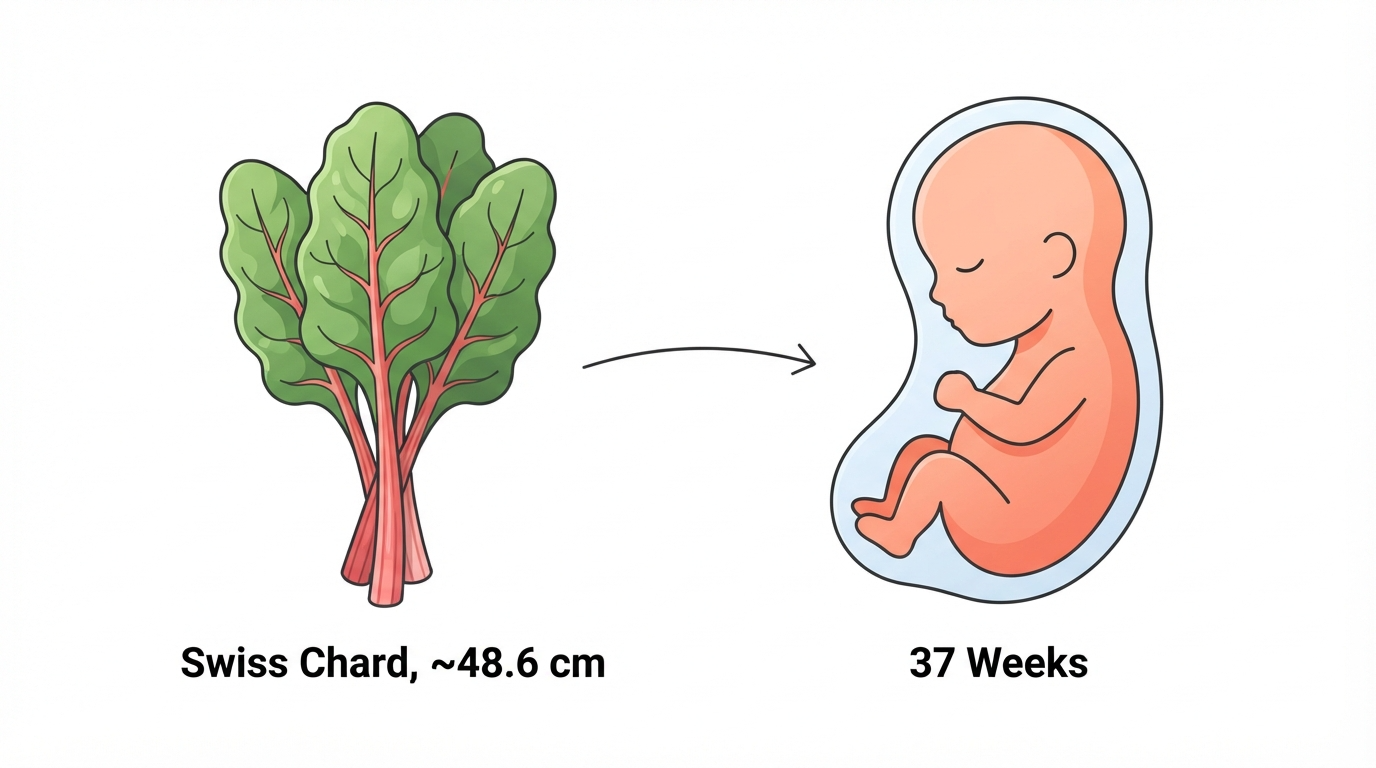
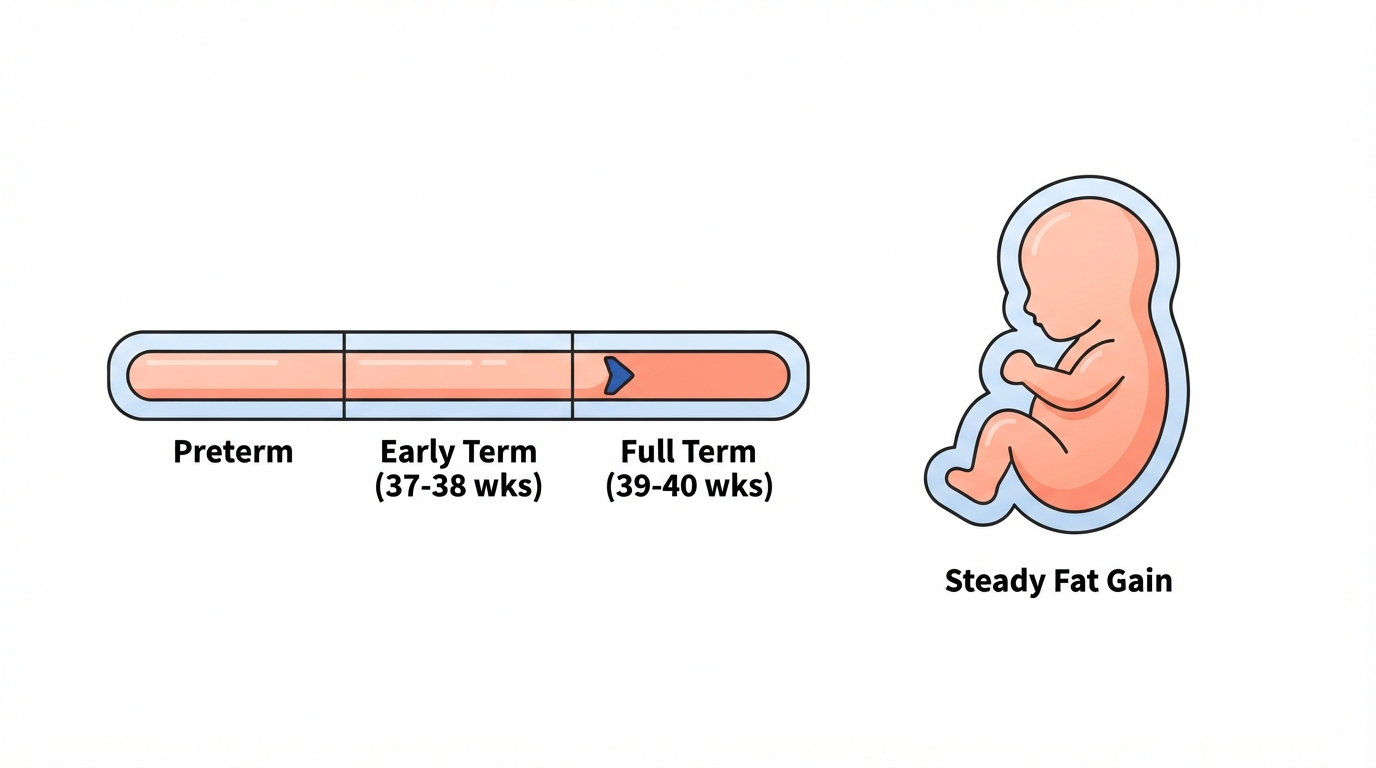
At 37 weeks pregnant, your baby is Swiss chard length and considered early term, with steady fat gain continuing. Now considered early term, baby could arrive any time from here — typically within about three weeks of a due date.
At 37 weeks pregnant, your baby is about as long as a bunch of Swiss chard, and is now officially considered "early term" as steady fat gain continues. Three weeks (give or take) to go, and your baby's body is largely just adding the finishing touches.
If your dates feel confusing, remember that gestational age counts from the first day of your last period (LMP), not from conception — so "37 weeks pregnant" usually means about 35 weeks since ovulation. For the full timeline, see our pregnancy week-by-week guide, or find out exactly how your due date is calculated. If you're picking up from last week, catch up on 36 weeks pregnant first.
Key takeaways
- Baby is about as long as a bunch of Swiss chard (roughly 48.6 cm, head to heel) and weighs around 2,859 grams.
- Your baby is now considered "early term," with steady fat gain continuing.
- About 3 weeks remain until a typical full-term due date.
What "37 Weeks Pregnant" Actually Means
Using standard gestational dating, week 37 starts about 35 weeks after ovulation. This is the official start of "early term" — the American College of Obstetricians and Gynecologists (ACOG) defines early term as 37 weeks, 0 days through 38 weeks, 6 days, with full term starting at 39 weeks. (Source: ACOG)
In fetal-age terms (counting from conception rather than your last period), 37 weeks gestational age is closer to "35 weeks post-conception."
Baby Size at 37 Weeks
At 37 weeks, your baby is about as long as a bunch of Swiss chard — roughly 48.6 centimeters, measured head to heel — and weighs around 2,859 grams. (Source: Baby Your Baby, Utah Department of Health)
Early Term, Steady Fat Gain
Reaching 37 weeks means your baby has crossed into "early term" territory, though full term still doesn't officially start until 39 weeks. Babies born early term generally do well, but they can still have a somewhat higher chance of issues like feeding or temperature regulation difficulty compared to babies born at full term.
Your baby keeps steadily gaining weight now, though length increases much more slowly from here. (Source: MedlinePlus, NIH) Toenails have also reached the tips of the toes around this stage — one of several small finishing touches your baby's body is completing before birth. (Source: Cleveland Clinic)
What You Might Notice at 37 Weeks Pregnant
Week 37 tends to bring a mix of a growing belly and the physical demands of late pregnancy. Here's what commonly shows up:
Losing your mucus plug, which can happen days or even weeks before labor starts.
Increased pelvic pressure, as your baby settles lower.
More frequent, sometimes stronger Braxton Hicks contractions, which can be tricky to tell apart from early labor.
Trouble sleeping, as the belly grows large enough to limit comfortable positions.
Swelling in the feet and ankles, especially by the end of the day.
Backaches, as your center of gravity continues shifting forward.
A burst of nesting energy, as the due date gets closer.
It's also completely normal to have few or no symptoms yet. Symptom timing and intensity vary widely from person to person and even between pregnancies for the same person.
What's Happening in Your Body
- Your baby is now considered early term.
- Steady fat gain continues, while length increases more slowly.
- Toenails have reached the tips of the toes.
- About 3 weeks remain until a typical full-term due date.
- Weekly prenatal appointments are typically underway.
Tips for Week 37
Learn to tell Braxton Hicks from real contractions — real contractions tend to get closer together, longer, and stronger over time.
Keep your hospital bag by the door, since labor can start with little warning from here.
Rest when you can, and pace nesting projects to avoid overdoing it.
Keep taking your prenatal vitamin — steady nutrition continues to matter through the rest of pregnancy.
Confirm your care team's plan for reaching them once labor starts, including after-hours contact info.
Tips for Partners
- Review the drive or route to the hospital or birth center together, just in case.
- Keep your phone charged and nearby, since things can move quickly from here.
- Help track contraction timing if it becomes hard to tell Braxton Hicks from real labor.
- Take on more of the physical chores as pelvic pressure and fatigue increase.
FAQ
How big is my baby at 37 weeks pregnant? About as long as a bunch of Swiss chard — roughly 48.6 centimeters, measured head to heel — and weighing around 2,859 grams.
What does "early term" mean? ACOG defines early term as 37 weeks, 0 days through 38 weeks, 6 days. Full term starts at 39 weeks. Babies born early term generally do well but may have a slightly higher chance of feeding or temperature regulation issues than full-term babies.
Is my baby still gaining weight at 37 weeks? Yes, steady fat gain continues, though your baby's length increases much more slowly from here compared to earlier in pregnancy.
Is it safe to have my baby at 37 weeks? Early term babies generally do well, but full term (39 weeks and beyond) is associated with the best outcomes when there's no medical reason to deliver sooner. Your provider can advise based on your specific situation.
How can I tell Braxton Hicks from real labor contractions? Real contractions tend to become more regular, closer together, longer, and stronger over time, and don't ease up with rest or position changes the way Braxton Hicks contractions often do.
What symptoms are normal at 37 weeks pregnant? Losing the mucus plug, pelvic pressure, stronger Braxton Hicks contractions, trouble sleeping, swelling, backaches, and nesting energy are all common at this stage.
How many weeks do I have left at 37 weeks pregnant? About 3 weeks remain until a typical 40-week due date, though labor can begin any time from here through 42 weeks and still be considered normal.
Pregnancy Checklist at Week 37
- Keep taking a prenatal vitamin daily
- Keep your hospital bag ready by the door
- Review how to tell Braxton Hicks from real labor
- Confirm your care team's after-hours contact plan
- Rest and pace any remaining nesting projects
- Finalize your route to the hospital or birth center
- Note any regular contractions, heavy bleeding, or reduced movement and call your provider if it occurs
Related guides
- 36 Weeks Pregnant: Symptoms, Baby Size & What to Expect — what happened the week before, as lanugo shed and head hair developed
- Pregnancy Week by Week: A Complete Guide — see what happens in every week and trimester, from implantation to full term
- How Is Your Due Date Actually Calculated? — the exact formula behind your due date, plus a free calculator
Week 37 brings early term status and steady fat gain, with roughly 3 weeks left until a typical due date.
Read related post: 36 Weeks Pregnant: Symptoms, Baby Size & What to Expect
Ready to throw the best reveal?
Create your free Poppit event — invitations, live betting pool, and registry in one link.
Create your event ✨