40 Weeks Pregnant: Symptoms, Baby Size & What to Expect
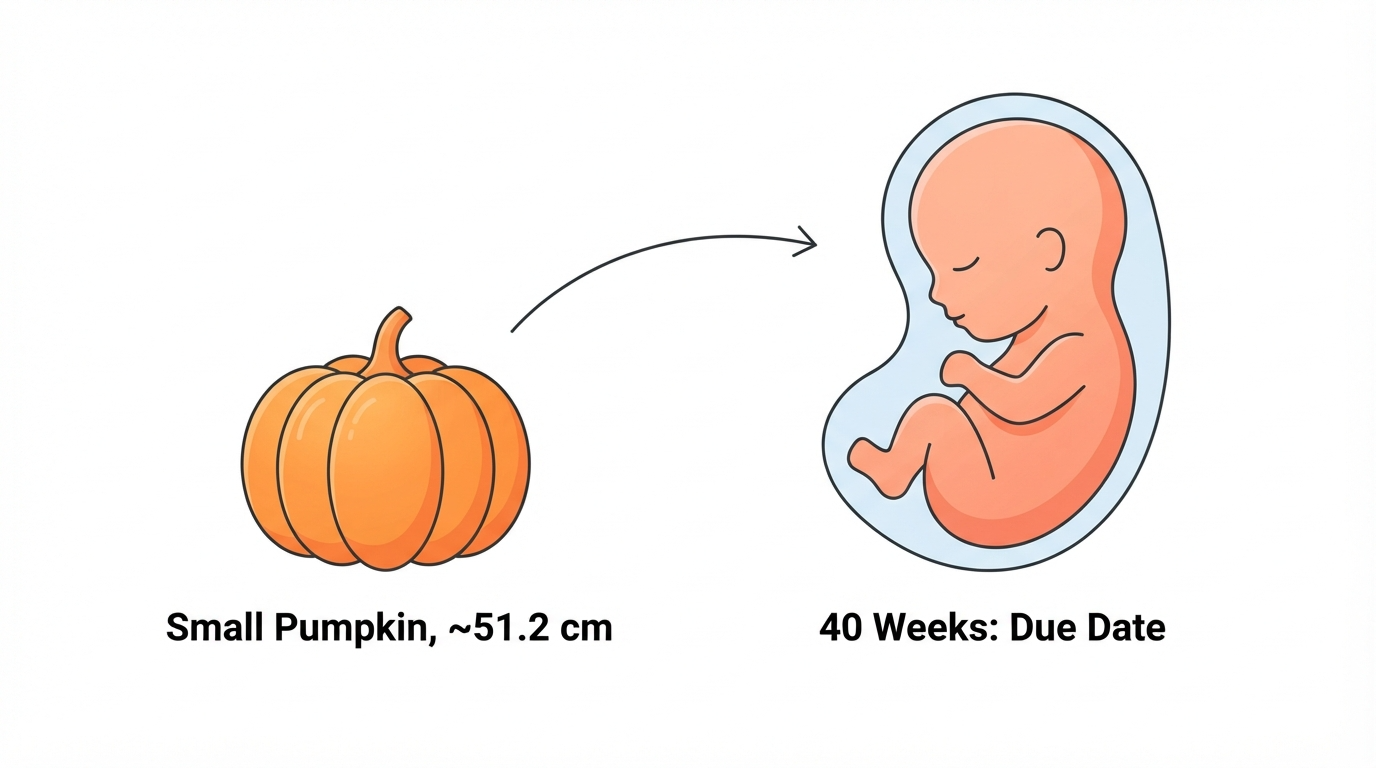
At 40 weeks pregnant, your baby is small pumpkin sized as you reach your official due date. Only an estimated 5% of babies are born on their exact due date, so your provider may discuss next steps soon.
At 40 weeks pregnant, your baby is about the size of a small pumpkin, and you've reached your official due date. This is the finish line on paper — though only an estimated 5% of babies actually arrive on their exact due date, so it's completely normal to still be waiting.
If your dates feel confusing, remember that gestational age counts from the first day of your last period (LMP), not from conception — so "40 weeks pregnant" usually means about 38 weeks since ovulation. For the full timeline, see our pregnancy week-by-week guide, or find out exactly how your due date is calculated. If you're picking up from last week, catch up on 39 weeks pregnant first.
Key takeaways
- Baby is about the size of a small pumpkin (roughly 51.2 cm, head to heel) and weighs around 3,462 grams.
- Only an estimated 5% of babies are born on their exact due date — going into labor anywhere from 37 to 42 weeks is considered normal.
- Your provider will likely discuss monitoring or induction options if labor hasn't started within the next week or two.
What "40 Weeks Pregnant" Actually Means
Using standard gestational dating, week 40 marks your official due date, about 38 weeks after ovulation. In fetal-age terms (counting from conception rather than your last period), this is closer to "38 weeks post-conception."
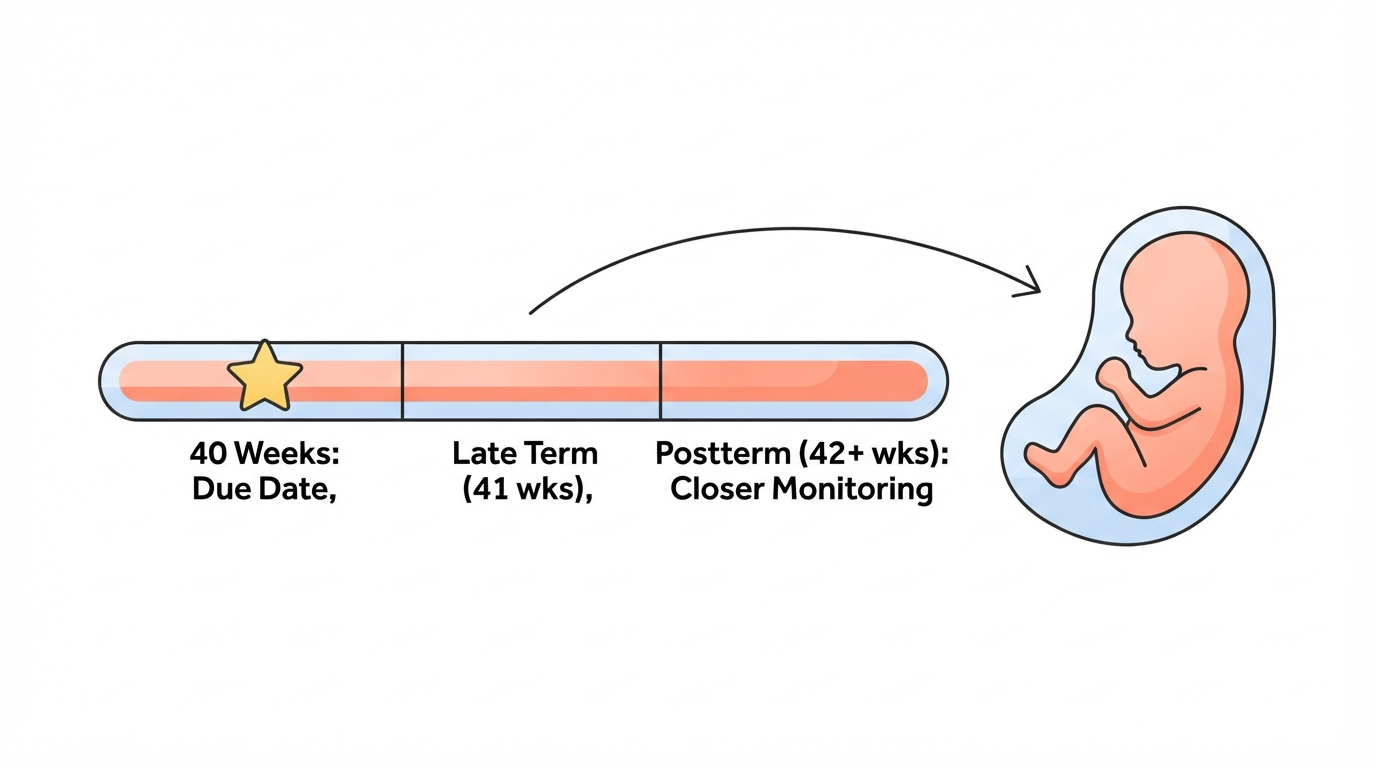
Your due date is an estimate, not a deadline. ACOG classifies 41 weeks, 0 days through 41 weeks, 6 days as "late term," and 42 weeks onward as "postterm" — categories that shape how closely your provider monitors things if your due date comes and goes. (Source: ACOG)
Baby Size at 40 Weeks
At 40 weeks, your baby is about the size of a small pumpkin — roughly 51.2 centimeters long, measured head to heel, and weighing around 3,462 grams, though a wide range of sizes is completely normal at this stage. (Source: Baby Your Baby, Utah Department of Health)
Ready for the Outside World
By 40 weeks, most of your baby's development is complete. Vernix, the waxy skin coating, and lanugo, the fine body hair, have mostly disappeared by now, though small amounts of either can still be present at birth. Fat continues rounding out your baby's arms, legs, and cheeks, helping with temperature regulation once outside the womb.
If your due date passes without labor starting, your provider will likely begin more frequent monitoring — often including non-stress tests or ultrasounds to check amniotic fluid levels and your baby's well-being — and may start a conversation about induction if you reach 41 to 42 weeks. (Source: ACOG)
What You Might Notice at 40 Weeks Pregnant
Week 40 tends to bring a mix of anticipation and the physical demands of these final days. Here's what commonly shows up:
Your water breaking, either as a sudden gush or a slow trickle — call your provider either way.
"Bloody show," a small amount of blood-tinged mucus, which can appear as labor gets closer.
Stronger, more regular contractions, a key sign that labor may be starting for real.
Increased pelvic pressure, as your baby settles as low as possible.
Trouble sleeping, from a mix of physical discomfort and anticipation.
Restlessness or anxiety about the wait, which is completely normal this close to (or past) your due date.
Swelling in the feet and ankles, especially by the end of the day.
It's also completely normal to have few or no new symptoms yet. Symptom timing and intensity vary widely from person to person and even between pregnancies for the same person.
What's Happening in Your Body
- Most of your baby's development is complete.
- Vernix and lanugo have mostly disappeared, though small amounts can remain at birth.
- Only about 5% of babies arrive on their exact due date.
- Closer monitoring typically begins if your due date passes without labor starting.
Tips for Week 40
Know the real signs of labor — regular, strengthening contractions, your water breaking, or bloody show — and call your provider when they show up.
Keep tracking your baby's movements, and report any noticeable decrease right away.
Ask your provider what their plan is if you go past your due date, including monitoring frequency and induction timing.
Try to rest and stay distracted, even though the waiting can feel long.
Keep your hospital bag by the door and your phone charged.
Tips for Partners
- Know the signs of labor as well as your partner does, so you can both act quickly when it's time.
- Stay close to home and reachable, especially once you're past the due date.
- Help manage anxiety about the wait — it's normal for both of you, and it will end.
- Keep the car ready to go and the route to the hospital or birth center fresh in mind.
FAQ
How big is my baby at 40 weeks pregnant? About the size of a small pumpkin — roughly 51.2 centimeters long, measured head to heel, and weighing around 3,462 grams, though a wide range of sizes is normal.
Is it normal to go past my due date? Yes, very. Only an estimated 5% of babies are born on their exact due date, and labor starting anywhere from 37 to 42 weeks is considered within the normal range.
What happens if I go past 40 weeks? Your provider will typically increase monitoring — often with non-stress tests or ultrasounds checking amniotic fluid and your baby's well-being — and may discuss induction options if you reach 41 to 42 weeks.
What's the difference between "late term" and "postterm"? ACOG defines late term as 41 weeks, 0 days through 41 weeks, 6 days, and postterm as 42 weeks, 0 days and beyond. These categories guide how closely your provider monitors you and your baby.
How do I know if it's real labor? Real labor contractions tend to become more regular, closer together, longer, and stronger over time, and don't ease up with rest. Your water breaking or bloody show are also signs labor may be starting.
What symptoms are normal at 40 weeks pregnant? Water breaking, bloody show, stronger contractions, pelvic pressure, trouble sleeping, restlessness, and swelling are all common around this stage.
When should I call my provider? Call right away for regular, strengthening contractions, your water breaking, heavy bleeding, a significant decrease in fetal movement, or any symptom your provider has told you to watch for.
Pregnancy Checklist at Week 40
- Keep tracking your baby's movements daily
- Know the real signs of labor and when to call your provider
- Keep your hospital bag by the door and phone charged
- Ask your provider about their plan if you go past your due date
- Rest and try to stay distracted during the wait
- Confirm support and childcare logistics one final time
- Call your provider right away for regular contractions, water breaking, heavy bleeding, or reduced movement
Related guides
- 39 Weeks Pregnant: Symptoms, Baby Size & What to Expect — what happened the week before, as your baby reached full term
- Pregnancy Week by Week: A Complete Guide — see what happens in every week and trimester, from implantation to full term
- How Is Your Due Date Actually Calculated? — the exact formula behind your due date, plus a free calculator
Week 40 marks your official due date — and however the timing works out, your baby is ready for the world whenever labor begins.
Read related post: 39 Weeks Pregnant: Symptoms, Baby Size & What to Expect
Ready to throw the best reveal?
Create your free Poppit event — invitations, live betting pool, and registry in one link.
Create your event ✨